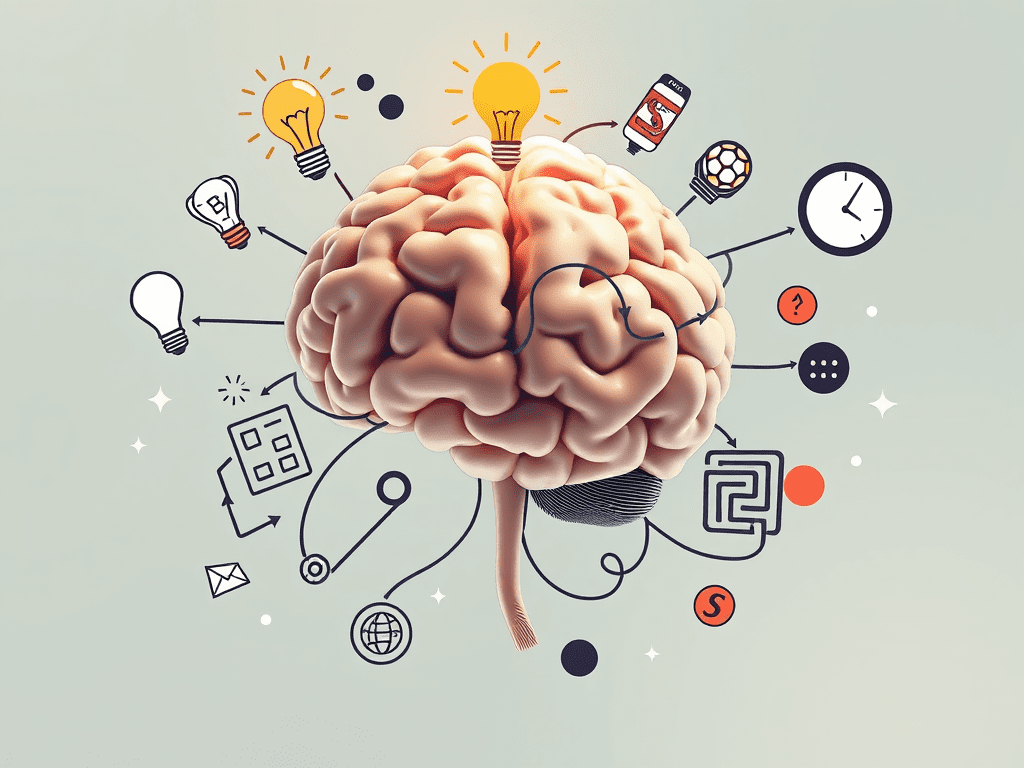
In today’s hyper‑competitive world, hidden forces in our own minds can derail the path to achievement. Cognitive biases—systematic thinking errors rooted in our brain’s shortcuts—often sabotage our success without us ever realizing it. This pillar post delves into the controversial truth behind these mental traps and equips you with strategies to neutralize them, so you can make smarter decisions, seize opportunities, and cultivate lasting success.
Understanding Cognitive Biases: The Hidden Saboteurs Of Your Success
Cognitive biases are the unconscious filters through which we interpret information, make judgments, and take action. While these mental shortcuts evolved to help us process complex data quickly, they often lead to flawed thinking that undermines our goals. By uncovering how biases form and the damage they inflict on achievement, we lay the groundwork for powerful debiasing techniques that will follow in later sections.
Defining Cognitive Biases And Their Impact On Achievement
A cognitive bias is a predictable pattern of deviation from rationality, where the brain relies on heuristics—simplified rules of thumb—to speed up decision‑making. Though efficient, these shortcuts introduce errors that can:
- Distort Risk Assessment: Underestimating dangers or overestimating gains.
- Skew Information Processing: Filtering evidence to fit preconceptions.
- Hinder Learning: Reinforcing outdated beliefs instead of adapting to new data.
- Impede Collaboration: Creating blind spots that resist feedback and diverse viewpoints.
Understanding the anatomy of cognitive biases is the first step toward recognizing when they’re sabotaging your success—and ultimately learning how to neutralize them for more effective decision‑making.
Top 5 Biases That Sabotage Decisions
While there are dozens of documented biases, five stand out for their frequency and impact on personal and professional outcomes. Identifying these “big five” mental traps empowers you to spot and counteract them before they derail critical choices.
Confirmation Bias: The Truth Filter
Confirmation bias occurs when we favor information that confirms our existing beliefs and dismiss or ignore contradictory evidence. This hidden saboteur can lead to echo chambers, poor market analyses, and stagnation in personal growth. To guard against it, actively seek out dissenting opinions, play devil’s advocate, and subject your assumptions to rigorous testing against diverse data sources.
Anchoring Bias: The Misleading Starting Point
Anchoring bias arises when the first piece of information we encounter becomes the reference point for all subsequent judgments. For example, an initial price quote can unduly influence negotiation outcomes. To reduce anchoring effects, silence the initial anchor by gathering independent data, set multiple hypothetical anchors, and pause before making judgments to reflect on alternative benchmarks.
Overconfidence Bias: The Triumph Trap
Overconfidence bias leads us to overestimate our knowledge, skills, or the accuracy of our predictions. This can result in underprepared presentations, missed deadlines, and failed ventures. Combat overconfidence by adopting a “pre‑mortem” mindset—imagine possible failure scenarios—solicit objective performance metrics, and regularly compare your forecasts against real outcomes to recalibrate expectations.
Availability Bias: The Visibility Illusion
Availability bias makes us judge the likelihood of events based on how easily examples come to mind. High‑profile successes or recent news stories become vivid but unrepresentative data points, skewing risk assessments and strategic plans. Neutralize this bias by compiling comprehensive datasets, using checklists to ensure you’ve considered all possibilities, and consulting experts to fill gaps your memory may overlook.
Loss Aversion: The Fear Of Letting Go
Loss aversion describes our tendency to prefer avoiding losses over acquiring equivalent gains. This bias can freeze decision‑making, encourage overly conservative strategies, and stifle innovation. To override loss aversion, reframe choices in terms of potential gains, set clearly defined risk thresholds, and use small‑scale experiments to build confidence in pursuing high‑reward opportunities.
The Controversial Science Behind Biased Thinking And Success
Behind every split‑second judgment and long‑term strategy lies a complex interplay of neural circuits and psychological forces. This section delves into the rigorous science that uncovers why cognitive biases emerge, how they’ve been documented through landmark studies, and the tangible consequences of ignoring these hidden saboteurs in real‑world scenarios.
Neuroscience Of Cognitive Biases And Brain Wiring
Modern imaging technologies such as functional magnetic resonance imaging (fMRI) and electroencephalography (EEG) have pinpointed specific brain regions that underlie biased decision‑making. Two key players are:
- Prefrontal Cortex (PFC): Responsible for executive functions—planning, deliberation, and impulse control. When the PFC is under‑activated, heuristics dominate, leading to snap judgments often colored by bias.
- Amygdala: The brain’s threat‑detection hub, triggering emotional responses to perceived risks or rewards. Heightened amygdala activity can amplify loss aversion and availability bias, skewing rational assessment.
Neuroscientists have observed that under cognitive load—stress, fatigue, or multitasking—the brain shifts from the PFC’s deliberate mode to the amygdala’s automatic mode, increasing susceptibility to biases. Studies show that simple interventions like brief mindfulness exercises or short breaks can restore PFC engagement, reducing bias‑driven errors by up to 25% in controlled tasks.
Psychological Studies Exposing Success Pitfalls
Pioneering work by Daniel Kahneman and Amos Tversky in the 1970s laid the foundation for understanding heuristics and biases. Their “Prospect Theory” demonstrated that individuals value losses disproportionately more than gains—quantifying loss aversion. Building on this, more recent experiments have revealed:
- The Framing Effect: Participants presented with identical choices framed as “90% success” versus “10% failure” make opposite decisions over 70% of the time, highlighting how context steers judgment.
- The Confirmation Trap: In controlled hypothesis‑testing tasks, subjects seek data that confirms their initial hypothesis nearly twice as often as data that could falsify it.
These findings underscore why high‑stakes decisions—from investment strategies to hiring top talent—frequently fall prey to deceptively simple mental shortcuts. Recognizing the documented patterns of bias is crucial for anyone striving to safeguard their success against invisible forces.
Real‑World Failures Caused By Unchecked Bias
The cost of ignoring cognitive biases isn’t just academic—it’s measured in lost revenue, failed projects, and shattered careers. Notable examples include:
- Financial Crises: In the lead‑up to the 2008 recession, overconfidence in housing‑market stability and confirmation bias among rating agencies inflated asset valuations, culminating in a global credit collapse.
- Corporate Downfalls: Kodak’s leadership repeatedly dismissed digital photography as a niche fad—anchoring on their film‑based success and blind to disruptive innovation—leading to bankruptcy filing in 2012.
- Aerospace Disasters: NASA’s Challenger explosion in 1986 was partly attributed to groupthink and loss aversion, where engineers downplayed O‑ring erosion risks to avoid schedule delays.
These high‑profile failures illustrate the perils of unexamined bias. They serve as cautionary tales: when organizations and individuals fail to neutralize mental shortcuts, the repercussions can be catastrophic. In the sections that follow, we’ll explore actionable methods to counteract these deep‑rooted tendencies and safeguard your path to success.
Spotting Your Bias Traps: Self‑Awareness Strategies
Before you can neutralize cognitive biases, you must first recognize when and how they influence your thinking. Self‑awareness strategies empower you to unmask hidden mental shortcuts, creating space for deliberate, rational decision‑making. The following techniques guide you through a structured bias audit, reflective exercises, and collaborative feedback loops that reveal blind spots and strengthen your objective insight.
Conducting A Personal Bias Audit In 5 Steps
A systematic bias audit transforms vague suspicions into concrete observations. By following these five steps, you’ll catalog instances of biased thinking and build a roadmap for targeted debiasing interventions.
- Document Key Decisions:Over the past month, list 8–10 critical decisions—business proposals, hiring choices, investment moves, or personal commitments. Recording real scenarios ensures your audit reflects genuine pressures and stakes.
- Identify Decision Drivers:For each decision, note the primary information sources, emotions, and assumptions you relied on. Ask yourself:
- Which data points felt most persuasive?
- What fears or hopes swayed my judgment?
- Did I seek out dissenting viewpoints?
- Match To Known Biases:Cross‑reference your decision drivers with common cognitive biases. For example, if you ignored contrary data, that’s confirmation bias; if you relied heavily on a single statistic, that could be anchoring bias.
- Rate The Impact:Assign each bias instance a “severity score” from 1 (minimal) to 5 (critical) based on:
- Financial or reputational cost
- Decision complexity
- Frequency of occurrence
- Create An Action Plan:For each high‑severity bias score, define one specific countermeasure—pause before deciding, implement a checklist, solicit external review—along with a timeline and accountability partner.
Completing this personal bias audit not only highlights your cognitive blind spots but also establishes clear, measurable steps toward neutralizing each mental trap.
Reflection Techniques To Reveal Blind Spots
Continuous self‑reflection sharpens your ability to detect emerging biases. Integrate these two proven exercises into your daily or weekly routine to surface hidden thought patterns:
- Structured Journaling:Set aside 10–15 minutes at day’s end to answer three prompts:
- “What decision did I make today that felt rushed or uncomfortable?”
- “What information did I disregard or overemphasize?”
- “How might a skeptical colleague critique my reasoning?”
- Mindful Pause Exercise:Before any major choice—drafting an important email, finalizing a proposal—take a 60‑second pause. During that time:
- Focus on your breathing.
- Label any emotions (e.g., anxiety, excitement).
- Identify the first piece of information that springs to mind.
Gathering Feedback To Counter Internal Filters
Solo introspection is powerful, but external perspectives complete the bias‑detection toolbox. Leveraging feedback from others can illuminate blind spots you may never see on your own.
- Devil’s Advocate Sessions:Assemble a small group—trusted peers or mentors—and assign one person to challenge your ideas rigorously. Encourage them to:
- Question underlying assumptions.
- Propose worst‑case scenarios.
- Highlight overlooked data.
- Anonymous 360° Reviews:Use a confidential survey tool to solicit candid input from colleagues and stakeholders on your decision‑making style. Key survey prompts:
- “Where do you see me most resistant to new information?”
- “When have I dismissed your feedback without due consideration?”
- “What patterns in my judgments concern you?”
- Data‑Backed Peer Collaboration:Partner with a colleague to exchange critical project data before final decisions. Commit to:
- Sharing raw analytics without commentary.
- Reviewing each other’s interpretations.
- Flagging potential biases in one another’s conclusions.
By combining a formal bias audit, reflective exercises, and structured feedback loops, you’ll cultivate robust self‑awareness. This foundational skill not only strengthens your immunity to cognitive biases but also paves the way for the practical debiasing tactics explored in the next section.
Practical How‑To Techniques To Neutralize Cognitive Biases
Recognizing cognitive biases is only half the battle—true mastery comes from actively neutralizing these mental shortcuts. In this section, you’ll discover evidence‑based, practical strategies to reframe your thinking, leverage objective data, and enlist collaborative checks so that biases no longer dictate your decisions. By implementing these how‑to techniques, you’ll transform biased impulses into deliberate, success‑driving judgments.
7 Proven Methods To Reframe And Debias Your Thinking
These seven debiasing methods have been validated in peer‑reviewed studies and real‑world applications. Integrate them one by one into your workflow to build a resilient, bias‑resistant mindset.
- Anchoring Awareness: Consciously generate multiple reference points before evaluating any proposal to dilute the effect of a single anchor.
- Pre‑Mortem Analysis: Predict potential failure scenarios in advance to counter overconfidence and uncover hidden risks.
- Devil’s Advocate Technique: Assign a colleague to intentionally challenge your assumptions and surface confirmation bias.
- Perspective Shifting: Frame the same decision from different stakeholder viewpoints to reveal unseen angles and mitigate egocentric bias.
- Decision Diaries: Record your rationale for key choices in real time, then review outcomes against your initial logic to recalibrate future judgments.
- Forced Accountability: Pair up with a peer or mentor and agree to report on your decision outcomes weekly, increasing reflection and reducing impulsivity.
- Structured Checklists: Use predefined question lists to ensure you consistently examine all relevant factors before finalizing any decision.
Using Debiasing Checklists For Objective Decisions
Checklists act as external memory aids, prompting you to evaluate information systematically and avoid heuristic traps. Begin by crafting a decision checklist with items such as:
- “Have I sought disconfirming evidence?”
- “What alternative explanations exist?”
- “Have I consulted diverse information sources?”
- “What’s the worst‑case and best‑case scenario?”
Implement your checklist at critical junctures—strategy meetings, budget approvals, or personal goal reviews. By forcing yourself to answer each question, you disrupt automatic bias triggers and ensure decisions are grounded in comprehensive analysis rather than one‑sided impressions.
Mindfulness Practices To Create Mental Clarity
Mindfulness meditation and breath‑focus exercises strengthen prefrontal cortex engagement, reducing emotional hijacks from the amygdala. Allocate 5–10 minutes before major decisions to:
- Observe your thoughts without judgment.
- Note recurring mental patterns or emotional surges.
- Recenter attention on neutral data points.
Clinical studies show that even brief mindfulness sessions can lower susceptibility to availability bias by reducing emotional reactivity and improving working memory capacity. As your mental clarity improves, you’ll notice an increased ability to spot when biased intuitions arise and consciously override them.
Cognitive Restructuring Exercises For Rational Thought
Cognitive restructuring involves challenging and reframing distorted thought patterns. Use the following exercise whenever you catch yourself making an impulsive judgment:
- Identify the Automatic Thought: Write down the immediate judgment (e.g., “This proposal will fail because it’s too risky”).
- Examine the Evidence: List facts supporting and contradicting that thought.
- Generate Balanced Alternatives: Craft a more objective statement (e.g., “This proposal carries risks, but the projected ROI and market trends justify testing it with a pilot program”).
- Adopt the New Perspective: Revisit your decision armed with the balanced statement to guide further analysis.
Regular use of cognitive restructuring rewires your habitual thought pathways, reducing the automatic pull of loss aversion and overconfidence bias over time.
Leveraging Data‑Driven Tools For Unbiased Insights
Objective data can dilute subjective biases, provided you use the right tools and processes to interpret it. Consider these approaches:
- Dashboards With Blind Analysis: Configure KPI dashboards that hide contextual labels—review performance metrics without knowing project names to prevent anchoring on well‑known brands or teams.
- Algorithmic Decision Support: Use regression models or A/B testing platforms to quantify risk and reward, ensuring choices are backed by statistical significance rather than gut feelings.
- Automated Alerts: Set thresholds for key metrics (e.g., customer churn rate, sales conversion) so you respond to real‑time data deviations instead of vivid anecdotes.
By integrating data‑driven tools into your decision ecosystem, you establish an impartial baseline that keeps emotional and confirmation biases in check. Just be sure to audit algorithms regularly for their own bias potential and maintain human oversight.
Collaboration Hacks To Balance Individual Bias
No matter how disciplined you become, solo decision‑making carries residual bias risk. These collaboration hacks introduce fresh perspectives and collective intelligence:
- Rotating Facilitators: Rotate the meeting facilitator role so that no single individual’s cognitive style dominates group discussions, reducing groupthink and anchoring on one leader’s viewpoint.
- Pre‑Meeting Data Packs: Distribute raw data and context materials 48 hours before meetings. Encourage participants to review independently to prevent live anchoring to the first speaker’s interpretation.
- Silent Brainstorming Rounds: Begin ideation sessions with written submissions, allowing quieter team members to contribute without social pressures that trigger conformity bias.
- Red Team Exercises: Assign a sub‑group to identify flaws in the proposed plan, systematically hunting for biases in assumptions, data interpretation, and projected outcomes.
Embedding these collaboration hacks ensures that individual biases are counterbalanced by structured group dynamics, leading to richer, more objective decision outcomes. With these practical how‑to techniques in your arsenal, you’re well on your way to neutralizing cognitive biases and unlocking sustainable success.
Embedding Bias‑Reduction In Your Daily Workflow
Lasting change occurs when bias‑neutralizing practices become second nature. By embedding bias‑resistant processes, training your team in collective rationality, and rigorously tracking progress, you create an organizational ecosystem that constantly safeguards decision‑making from cognitive pitfalls. This section details actionable steps to institutionalize bias‑reduction, ensuring your success strategies are sustained and scalable.
Designing Bias‑Resistant Processes For Teams
Structured workflows can inoculate teams against common biases, transforming ad‑hoc choices into disciplined, transparent decision paths. Consider these process designs:
- Standardized Decision Frameworks:Adopt decision templates—such as RACI charts or decision matrices—that require explicit documentation of objectives, alternatives, and supporting data. By mandating uniform inputs, you minimize anchoring and availability bias.
- Multi‑Stage Approval Gates:Break major initiatives into phases with clear “go/no‑go” criteria. Each gate should involve different stakeholders to reduce confirmation bias and ensure fresh perspectives at every stage.
- Blind Reviews:Remove identifying information from proposals or performance reports during initial review. This anonymity combats affinity bias and overconfidence in familiar contributors, focusing evaluation on substance over name recognition.
- Time‑Boxed Deliberation:Allocate fixed discussion periods followed by reflection intervals. Time‑boxing prevents premature consensus, curbs groupthink, and allows individuals to process information independently before reconvening.
- Automated Checkpoints:Integrate software tools that prompt teams to complete critical bias‑check questions at key milestones—“Have we tested this assumption?” “What evidence contradicts our view?”—locking in deliberate pauses for scrutiny.
Training And Coaching For Collective Rationality
Developing bias‑aware individuals is essential, but fostering collective rationality amplifies impact. Training programs and coaching interventions equip teams with shared language, techniques, and accountability structures to neutralize biases collaboratively.
- Interactive Workshops:Host quarterly workshops focused on a specific bias—confirmation, anchoring, or groupthink. Use real case studies and role‑playing exercises to practice debiasing techniques in realistic scenarios.
- Peer Coaching Circles:Form small groups that meet bi‑weekly to discuss recent decisions, share bias‑audit findings, and coach one another through reframing exercises. Peer accountability deepens learning and embeds new habits.
- Bias‑Awareness Certification:Create an internal certification program where employees complete modules on cognitive science, decision frameworks, and debiasing tools. Recognize certified individuals as “Bias Champions” to lead future initiatives.
- On‑Demand Microlearning:Deploy short, focused e‑learning clips (3–5 minutes) that team members can access before critical meetings. Topics might include “Spotting Your Bias in 60 Seconds” or “How to Run a Devil’s Advocate Session.”
- Executive Coaching:Provide one‑on‑one coaching for leaders to model bias‑resistant behaviors. Coaches can conduct mock scenario analyses, debrief real decisions, and reinforce accountability for bias‑reduction metrics.
Tracking Progress With Bias‑Reduction Metrics
What gets measured gets managed. Establishing clear, data‑driven metrics enables you to monitor the effectiveness of your bias‑reduction efforts, identify areas for improvement, and celebrate tangible wins.
- Decision Quality Score (DQS):Rate key decisions on a scale of 1–10 based on criteria such as thoroughness of analysis, diversity of perspectives, and adherence to checklist protocols. Track average DQS over time to gauge process improvements.
- Bias Incident Log:Maintain a centralized registry of bias occurrences—missed risks, post‑mortem surprises, or stakeholder complaints. Classify incidents by type (e.g., anchoring, confirmation) and severity to spot recurring patterns.
- Training Completion Rates:Monitor participation and certification levels across teams. Correlate completion rates with improvements in DQS or reductions in bias incidents to validate training ROI.
- Turnaround Time For Debiasing Actions:Measure the average time between identifying a bias vulnerability (via audit or incident) and implementing a remediation—checklist updates, process tweaks, or coaching sessions.
- Stakeholder Satisfaction Index:Survey decision stakeholders quarterly on perceived fairness, clarity, and confidence in outcomes. Use net promoter‑style questions to track trends in trust and collaboration.
By weaving these metrics into your regular performance reviews and dashboards, you create a culture of continuous improvement. Teams learn to celebrate bias‑reduction milestones—such as a 20% drop in anchoring incidents or a 15% rise in Decision Quality Scores—fueling motivation to sustain and deepen their bias‑neutralizing practices.
Embedding bias‑reduction in daily workflows transforms abstract concepts into tangible, repeatable activities. With structured processes, targeted training, and rigorous metrics in place, you’ll build an enduring framework that shields your organization from cognitive pitfalls and drives consistent, high‑quality decisions.
Inspiring Success Stories: Overcoming Bias To Achieve Breakthroughs
Real‑world examples bring bias‑reduction strategies to life, illustrating how visionary leaders and entrepreneurs have recognized and neutralized their own mental shortcuts to achieve remarkable outcomes. In these case studies, you’ll see how confirmation bias and anchoring bias were challenged head‑on—and draw actionable lessons to apply in your own journey toward success.
Case Study 1: Leader Neutralizes Confirmation Bias For Market Gain
Context: In 2014, Microsoft faced stagnating PC sales and growing cloud competition. Long entrenched in a “Windows‑first” culture, executives filtered data to confirm that desktop dominance would endure—ignoring market signals favoring cloud services.
Actions Taken:
- Perspective Audit: Newly appointed CEO Satya Nadella instituted a “listening tour,” meeting frontline developers, customers, and partners. By actively soliciting dissenting viewpoints, he surfaced critical feedback that challenged the entrenched Windows‑centric mindset.
- Data Reorientation: Nadella’s leadership team compiled comprehensive market analytics—cloud infrastructure growth rates, developer platform usage, and competitor benchmarks—then presented findings in an anonymized format to prevent senior‑executive anchoring on legacy metrics.
- Decision‑Gate Checklists: Before major investments, teams were required to complete a “Devil’s Advocate” section in strategy documents, explicitly outlining data that contradicted proposed initiatives.
Outcomes: By systematically exposing and questioning confirmation bias, Microsoft shifted its strategy, embracing Azure as a centerpiece. Between 2015 and 2020, Azure revenue grew from under $5 billion to over $50 billion, propelling Microsoft to one of the fastest‑growing cloud providers worldwide. The cultural pivot also spurred collaboration across formerly siloed divisions, further accelerating innovation.
Case Study 2: Entrepreneur Uses Data To Defeat Anchoring Bias
Context: In 2009, Airbnb co‑founder Brian Chesky faced a critical pricing dilemma. Early listings were arbitrarily set at $100 per night—an anchor based on the founders’ gut feel rather than market data. This led to inconsistent occupancy rates and frustrated hosts.
Actions Taken:
- Blind Pricing Experiment: Chesky’s team launched an A/B test that hid the $100 anchor. They randomly displayed two different suggested price points—one based on the original $100 and another derived from aggregated competitor data—without disclosing the methodology to hosts.
- Algorithmic Guidance: Leveraging machine learning models, Airbnb introduced “Smart Pricing,” which dynamically recommended nightly rates based on location demand, seasonality, and comparable listings, effectively replacing arbitrary anchors with data‑driven recommendations.
- User Education: Hosts received interactive tutorials showing how market factors influenced demand and pricing, empowering them to trust the data rather than their initial price anchors.
Outcomes: Within six months, average occupancy rates increased by 20%, and host revenue per available night rose by 15%. By neutralizing anchoring bias through empirical testing and algorithmic support, Airbnb transformed host trust and platform growth—scaling from a few thousand listings to over one million in just four years.
Key Lessons And Actionable Takeaways For Your Success
These success stories underscore universal principles you can adapt to your own context:
- Solicit Diverse Perspectives: Actively seek out voices that challenge your assumptions. Whether through “listening tours” or formal Devil’s Advocate roles, dissenting input prevents confirmation bias from calcifying decisions.
- Use Anonymous or Blinded Data: Present information without contextual anchors—hide legacy labels, initial figures, or author names—to ensure decisions rest on substance, not preconceived notions.
- Implement Structured Experiments: A/B testing and pilot programs allow you to compare alternatives without committing fully. Use randomized trials to reveal true performance, free from anchoring or availability distortions.
- Embed Accountability Mechanisms: Require bias‑check checklists, decision‑gate reviews, or peer‑reporting frameworks. Publicly track when and how biases are identified and mitigated to reinforce a culture of vigilance.
- Educate and Empower Stakeholders: Train team members on common biases and equip them with debiasing tools—checklists, data dashboards, or algorithmic recommendations—so decision‑making becomes a collective strength.
By learning from how Microsoft and Airbnb confronted and conquered their own bias traps, you gain a blueprint for integrating these practices into your workflows. The path to breakthrough success lies not in eliminating complexity, but in mastering the hidden contours of your own cognition—turning cognitive biases from saboteurs into catalysts for smarter, bolder decisions.
Discover more from Alchem Learning
Subscribe to get the latest posts sent to your email.