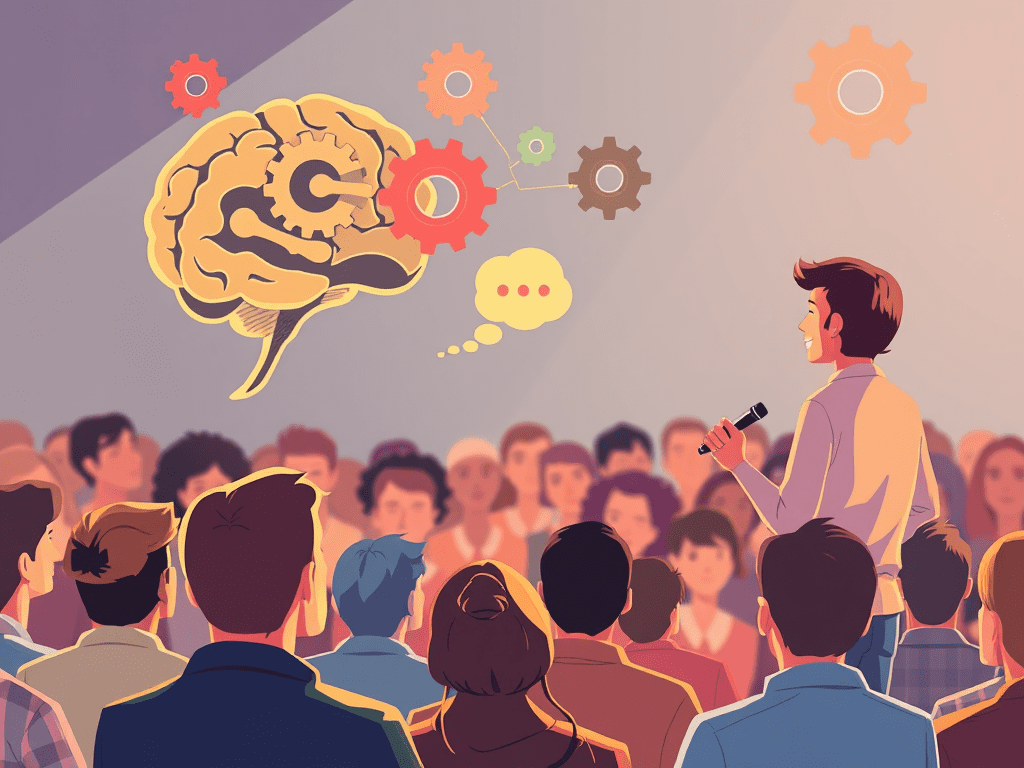
Body language is the silent symphony of signals we constantly send and receive beyond spoken words. It’s a universal language that taps into our deepest emotions, social dynamics, and subconscious reactions. In this comprehensive guide on “How to Decode Body Language Like a Pro: 10 Hidden Cues Revealed by Psychology,” we begin by grounding you in the psychological foundations of nonverbal communication. By mastering these core concepts, you’ll unlock the power to interpret gestures, postures, and microexpressions with precision—elevating your observational skills and emotional intelligence.
Understanding the Psychology Behind Body Language
Before you can decode hidden cues or analyze fleeting microexpressions, you need a solid grasp of why body language exists and how it functions in human interaction. This section unpacks the psychological principles that drive nonverbal communication, setting the stage for practical decoding techniques.
What Is Body Language?
Body language encompasses the unconscious gestures, postures, facial expressions, and eye movements that accompany—or even replace—spoken words. It operates on multiple levels:
- Nonverbal Signals: Gestures (e.g., nodding), facial expressions (e.g., smiling), and posture (e.g., crossing arms).
- Paralanguage: Vocal qualities like tone, pitch, and rhythm that convey emotion beyond literal words.
- Proxemics: Use of personal space and distance in social interactions.
Understanding these layers is crucial for anyone wondering how to decode body language effectively—whether you’re in a boardroom negotiation or reading social cues at a networking event.
How Psychology Explains Nonverbal Communication
Psychology reveals that nonverbal communication evolved as a survival mechanism, enabling our ancestors to rapidly convey danger, status, or empathy without uttering a sound. Modern research identifies several key drivers:
- Emotional Leakage: True feelings often “leak” through involuntary expressions—microexpressions—that last only fractions of a second.
- Mirror Neurons: Brain cells that fire when we observe someone else’s actions, fostering empathy and synchrony in social interactions.
- Schema Activation: Mental frameworks that trigger expected nonverbal patterns (e.g., a defensive posture when feeling threatened).
By recognizing these psychological underpinnings, you can distinguish between deliberate gestures and authentic emotions—crucial for decoding hidden cues with authority.
Primary Versus Secondary Nonverbal Cues
Not all body language signals carry the same weight. Psychology categorizes nonverbal cues into primary and secondary signals:
- Primary Cues: Fundamental expressions and postures that are biologically programmed and universal—such as the six basic facial expressions (happiness, sadness, anger, fear, surprise, disgust).
- Secondary Cues: Learned gestures and culturally specific signals—like the thumbs-up in Western cultures or cheek kissing in some Mediterranean societies.
When you learn how to decode body language like a pro, your first step is to anchor your analysis in primary cues to avoid cultural misinterpretation. Then, layer on secondary cues by calibrating for context—ensuring your interpretation of nonverbal communication is both accurate and sensitive.
Building Your Body Language Toolkit: Essential Skills
Equipping yourself with the right skills is the cornerstone of learning how to decode body language like a pro. In this section, we’ll explore three foundational competencies—observational awareness, emotional intelligence, and contextual calibration—that form your body language toolkit. Mastering these essential skills empowers you to distinguish genuine signals from noise, enhancing both your personal and professional interactions.
Sharpening Your Observational Awareness
Observational awareness is your ability to notice subtle shifts in posture, facial expression, and gesture—often the very “hidden cues” that reveal true intent. To hone this skill:
- Practice Focused Watching: Choose a neutral setting (e.g., a café or park bench) and spend 5–10 minutes observing a single individual. Note changes in their breathing, microexpressions, and hand movements.
- Train with Video Analysis: Record yourself during a presentation or conversation. Playback in slow motion to identify unconscious gestures—such as foot tapping or lip pressing—that you may have missed in real time.
- Use a Body Language Checklist: Keep a mental or physical list of common nonverbal signals (e.g., crossed arms, eyebrow flashes, pacing). As you observe, tick off each cue you notice to reinforce pattern recognition.
By deliberately practicing these techniques, you’ll build the neural pathways needed to instantly register nonverbal cues, rather than relying solely on conscious effort.
Harnessing Emotional Intelligence for Decoding Cues
Emotional intelligence (EQ) is the ability to perceive, understand, and manage emotions—both your own and others’. High EQ amplifies your capability to interpret hidden body language cues accurately. Key strategies include:
- Self-Awareness Exercises: Regularly check in with your own emotional state. Simple prompts like “How am I feeling right now?” reduce projection bias when reading someone else’s nonverbal signals.
- Active Empathy Drills:
- Watch short video clips without audio and write down the emotion you believe each person is experiencing based solely on body language.
- Compare your notes with captions or transcripts to validate your interpretations.
- Emotion Labeling Practice: In conversations, mentally label observed emotions (“She looks frustrated,” “He seems excited”). This habit strengthens your ability to connect visible cues with internal states.
Elevating your EQ not only helps you decode nonverbal communication but also fosters stronger rapport and trust—critical outcomes when applying advanced body language techniques.
Contextual Calibration for Accurate Interpretation
No gesture exists in a vacuum. Contextual calibration—the process of situating nonverbal cues within environmental and cultural frameworks—ensures your interpretations align with reality rather than misconception. Follow these calibration steps:
- Establish a Baseline: Observe how an individual typically behaves when relaxed and unobserved. This “neutral” state serves as your reference point for detecting deviations indicating stress, excitement, or deception.
- Assess Environmental Factors: Consider factors such as room temperature, seating arrangement, and recent events. For example:
- If someone is shivering, crossed arms may reflect cold rather than defensiveness.
- A crowded room can trigger territorial gestures (e.g., arm-blocking) unrelated to interpersonal conflict.
- Cultural and Individual Differentiators:
- Research general cultural norms for gestures (e.g., personal space requirements vary widely by region).
- Account for personality traits—an introvert’s minimal gestures don’t necessarily signal deceit, just a reserved style.
By calibrating with context, you reduce false positives and ensure that your decoding of body language remains both precise and culturally sensitive.
Collectively, sharpening your observational awareness, harnessing emotional intelligence, and applying contextual calibration form a powerful tripod supporting your journey to decode body language like a pro. With these essential skills in place, you’re primed to move into advanced decoding techniques and uncover the ten hidden cues psychology reveals.
10 Hidden Body Language Cues That Speak Volumes
Having built your toolkit, it’s time to put theory into practice by uncovering ten hidden body language cues that psychology has identified as reliable indicators of emotion, intent, and social dynamics. Each cue offers a window into unspoken thoughts—mastering them elevates your ability to decode body language like a pro.
Cue #1: Baseline Behavior Benchmarking
Defining the Baseline
Baseline behavior refers to an individual’s typical nonverbal patterns when relaxed. Observe someone in a neutral environment—note their habitual gestures, posture, and facial expressions.
Psychological Significance
Deviations from baseline, such as sudden arm crossing or eyebrow flicks, flag emotional shifts like discomfort or defensiveness.
Cue #2: Microexpressions of Emotion
Universality and Recognition
Microexpressions are involuntary facial contractions lasting 1/25–1/5 of a second, revealing true feelings regardless of spoken words.
Underlying Psychological Roots
Rooted in evolutionary survival, these fleeting expressions signal genuine emotions—anger, fear, joy—before conscious control masks them.
Cue #3: Posture and Power Dynamics
Open Versus Closed Postures
An open stance—shoulders back, chest visible—signals confidence and approachability; closed posture—arms folded, hunched shoulders—communicates defensiveness or insecurity.
Status Signals
High-status individuals often occupy more space (expansive postures), while lower-status people adopt contracted poses.
Cue #4: Gesture Clusters and Meaning
Illustrators, Emblems, Regulators
Illustrators (hand movements aligned with speech), emblems (culture-specific signs), and regulators (gestures that control conversation flow) each serve distinct communicative functions.
Cultural Variations
Emblems like the “OK” sign or thumbs-up vary in meaning globally—contextual knowledge guards against misinterpretation.
Cue #5: Eye Contact Patterns
Engagement Versus Evasion
Steady eye contact signals interest and honesty; frequent gaze aversion or rapid blinking often indicates discomfort or deception.
Psychological Drivers
Pupil dilation accompanies arousal or attraction, while narrowed eyes can reflect skepticism or distaste.
Cue #6: Vocal Tone and Pitch Shifts
Emotional Leakage in Voice
Subtle shifts in pitch, tempo, and volume convey excitement, nervousness, or authority beyond the words themselves.
Interpreting Prosodic Cues
Faster speech may signal enthusiasm; a lowered tone often indicates seriousness or dominance.
Cue #7: Pupil Dilation and Blink Rate
Indicators of Interest and Stress
Dilated pupils often reflect attraction or cognitive engagement; increased blink rate can be a stress or cognitive-load response.
Neurological Basis
Pupil size is controlled by the autonomic nervous system, linking physical response directly to emotional state.
Cue #8: Territorial and Proxemic Shifts
Personal Space Boundaries
Approaching too closely can trigger discomfort; stepping back maintains comfort zones, signaling a need for distance.
Contextual Interpretation
Office cubicles, crowded elevators, and cultural norms all influence proxemic behaviors—calibrate accordingly.
Cue #9: Self‑Touch and Comfort Gestures
Soothing Behaviors
Self-touching (rubbing the neck, stroking the arm) often calms nerves, indicating anxiety or self-reassurance.
What They Reveal About Anxiety
Frequent grooming gestures when not needed for hygiene suggest heightened stress or insecurity.
Cue #10: Synchrony and Mirroring
Rapport Building Signals
Subconscious mirroring of posture or gestures fosters trust and indicates positive rapport between interlocutors.
Psychological Mechanisms
Mirror neuron activation underlies this behavior, promoting empathy and social bonding.
Decoding Microexpressions and Subtle Gestures Like a Pro
Microexpressions and subtle gestures represent some of the most powerful hidden cues psychology has uncovered. Though they last for fractions of a second, these brief signals reveal authentic emotions that words often conceal. By learning to decode microexpressions and fleeting hand or foot movements with precision, you’ll elevate your body language expertise—gaining insights that separate amateur observers from true professionals.
Anatomy of Facial Microexpressions
Facial microexpressions are involuntary facial contractions that flash across the face in 1/25 to 1/5 of a second. Renowned psychologist Paul Ekman identified six universal emotions—happiness, sadness, anger, fear, surprise, and disgust—each associated with a distinct microexpression pattern. To decode these hidden cues:
- Observe Muscle Groupings: Focus on key areas: the eyes (orbicularis oculi), brows (corrugator supercilii), nose (levator labii), and mouth (zygomaticus major). For example, a genuine smile (Duchenne smile) engages both the zygomaticus major and orbicularis oculi.
- Use Slow-Motion Playback: When analyzing recorded footage, slow the video to at least 25% speed. This magnifies microexpressions, making it easier to spot the swift upturn of a mouth corner or a rapid brow flash that betrays concealed emotion.
- Apply Facial Action Coding System (FACS): Developed by Ekman and Friesen, FACS categorizes every possible facial movement into action units (AUs). Training in FACS enables you to label each microexpression systematically, reducing interpretation bias.
Mastery of microexpression anatomy provides a foundational skill for any expert aiming to decode body language like a pro, ensuring you detect genuine emotional undercurrents rather than surface cues alone.
Identifying Fleeting Hand and Foot Movements
Beyond the face, hands and feet offer a treasure trove of subtle gestures that often go unnoticed. These limb movements—ranging from toe tapping to finger drumming—can signal impatience, stress, or hidden enthusiasm. Key strategies for detection include:
- Establish a Silent Observation Frame: Before engaging, observe from a distance for at least 30 seconds. Note repetitive hand or foot patterns such as:
- Rapid foot swiveling or bouncing indicating nervous energy.
- Finger interlacing or knuckle cracking reflecting tension.
- Hand steepling (fingertips touching) suggesting confidence or contemplation.
- Watch for Clustered Gestures: Single gestures can be misleading. True indicators emerge when gestures cluster—such as foot skewing combined with gaze aversion, pointing to discomfort or desire to exit a situation.
- Calibrate Against Baseline Limb Activity: Compare observed behaviors to an individual’s neutral pattern. A sudden increase in hand movements may reveal anxiety, while a decrease could signal disengagement.
By systematically cataloging these fleeting gestures, you’ll refine your ability to decode nonverbal signals that even seasoned communicators overlook.
Tools and Technologies for Precision Analysis
In the digital age, advanced tools amplify your capacity to decode microexpressions and subtle gestures with scientific rigor. Incorporating technology ensures high accuracy and lends credibility to your analyses. Consider these professional-grade solutions:
- High-Frame-Rate Cameras: Cameras capturing at least 120 frames per second (fps) reveal microexpressions imperceptible at standard 30 fps. Integrate these into training sessions to capture every nuanced facial twitch or hand flick.
- Automated Facial Recognition Software: Platforms like Noldus FaceReader or iMotions employ machine learning to detect and classify facial action units in real time. These systems boast up to 90% accuracy in identifying basic emotions, streamlining your decoding process.
- Wearable Motion Sensors: Lightweight accelerometers and gyroscopes embedded in wristbands or anklets track micro-movements of limbs. Data analytics dashboards then translate raw motion signals into interpretable metrics—such as stress level or engagement intensity.
- Biofeedback Integration: Pair nonverbal analysis with physiological sensors measuring heart rate variability (HRV) and galvanic skin response (GSR). Correlating microexpressions with stress markers deepens your understanding of emotional states.
By leveraging these technologies, you not only sharpen your own observational toolkit but also present data-driven insights—cementing your reputation as an authority in decoding body language. Whether in corporate training, clinical psychology, or high-stakes negotiations, these tools provide the precision and validation needed for pro-level analysis.
Combining a deep understanding of microexpression anatomy, keen recognition of limb signals, and state-of-the-art analytical tools empowers you to decode body language with unparalleled accuracy. As you progress, these advanced decoding techniques will uncover the silent dialogue underlying every interaction—transforming the way you perceive and influence human behavior.
Advanced Contextual Interpretation: From Signals to Insights
Decoding individual body language cues is powerful, but without context, even accurate observations can lead to flawed conclusions. Advanced contextual interpretation weaves together verbal content, situational factors, and personal backgrounds to transform isolated signals into actionable insights. In this section, you’ll learn how to integrate multiple data streams, respect cultural and individual differences, and sidestep common misinterpretation pitfalls—ensuring your analysis of nonverbal communication is both precise and principled.
Integrating Verbal and Nonverbal Data Streams
Effective decoding of body language like a pro requires treating nonverbal signals and spoken words as two sides of the same communication coin. When you align tone, word choice, and gesture, discrepancies between them often reveal hidden meanings. Follow these steps:
- Transcript Cross‑Check: During or immediately after an interaction, jot down key phrases alongside observed gestures or expressions. Note moments where body language contradicts verbal assertions (e.g., “I’m fine” accompanied by a downward eye glance).
- Prosody Alignment: Listen for shifts in vocal tone, pace, or volume. A raised pitch on a phrase or sudden pause, paired with a tightening jaw or clenched fists, often signals suppressed emotion despite neutral wording.
- Semantic and Kinematic Synchrony: Observe whether hand illustrators match the verbal narrative. When gestures lag behind or diverge—such as gesturing “up” while saying “down”—it may indicate cognitive dissonance or intentional deception.
By triangulating speech content, vocal paralanguage, and gestural timing, you build a holistic picture of intent—amplifying your ability to decode hidden cues with confidence.
Cultural and Individual Variations in Body Language
While certain nonverbal behaviors are universal, many cues are shaped by cultural norms and personal idiosyncrasies. Advanced interpreters calibrate for these variations to avoid misreading gestures or expressions. Key considerations include:
- Cultural Norms Matrix: Develop a reference guide that maps common gestures, personal space expectations, and eye‑contact conventions across cultures relevant to your field. For example:
- In Japan, prolonged silence and minimal gestures convey respect.
- In Mediterranean cultures, expansive hand movements and close proximity indicate engagement.
- Individual Baseline Profiles: For recurring contacts—such as clients or colleagues—record baseline nonverbal patterns across multiple meetings. Note personal quirks like habitual foot tapping or trademark hand steepling that differ from cultural generalizations.
- Adaptive Calibration: When interpreting a novel subject, start with universal primary cues (e.g., microexpressions) before layering cultural or personal adjustments. This stepwise approach locks in high-confidence observations first.
Respecting both macro‑level cultural frameworks and micro‑level personal styles ensures your decoding remains accurate, nuanced, and empathetic—especially important when advising international teams or diverse audiences.
Avoiding Common Misinterpretation Pitfalls
Even seasoned observers can fall prey to biases and errors when interpreting body language. Recognizing and mitigating these pitfalls is essential for maintaining analytical integrity. Watch out for:
- Confirmation Bias: The tendency to notice only cues that align with preexisting beliefs. Counteract this by actively seeking disconfirming evidence—question whether a crossed arm always signals defensiveness or could be a simple comfort posture.
- Overgeneralization: Assuming one gesture always means the same thing. For instance, foot tapping might indicate impatience in one context but could reflect coin‑edging in a cold room.
- Projection Error: Attributing your own emotional state to others. Before concluding someone is anxious because you feel anxious, re‑establish their baseline behavior under low-stakes conditions.
- Context Stripping: Interpreting isolated gestures without situational data. Always ask: What just happened? What was said? Where and when did it occur?
In practice, build a structured post‑interaction review where you list your interpretations, identify possible biases, and cross‑validate with additional observers or recorded data. This reflective process sharpens your judgment over time, ensuring your body language analyses remain robust, reliable, and free from common analytical traps.
By integrating verbal and nonverbal streams, accounting for cultural and individual variation, and vigilantly avoiding interpretive pitfalls, you transform raw body language signals into deep psychological insights. With these advanced contextual interpretation skills in your repertoire, you’re ready to apply nuanced understanding in real‑world scenarios—turning hidden cues into strategic intelligence.
Mastering Body Language for Influential Communication
Translating your deep understanding of hidden cues into persuasive, trustworthy interactions distinguishes true experts from novices. In this final pillar section, you’ll learn how to apply body language decoding skills to enhance influence and rapport in both professional and personal contexts. We’ll also address the ethical boundaries of nonverbal analysis and share strategies for continuous improvement—ensuring you maintain integrity while perfecting your craft.
Applying Insights in Professional and Personal Settings
Whether you’re leading a high-stakes negotiation, coaching a team, or strengthening friendships, deliberate use of body language insights can amplify your impact. Key applications include:
- Leadership and Presentations:
- Commanding Presence: Adopt open postures (uncrossed arms, squared shoulders) and steady eye contact to project confidence and authority.
- Authentic Warmth: Pair genuine Duchenne smiles with forward leans to signal approachability, reinforcing trust during speeches or meetings.
- Engagement Monitoring: Scan your audience for microexpressions of confusion or boredom. Pause to re-engage or clarify when you spot furrowed brows or glazed eyes.
- Negotiations and Sales:
- Mirroring for Rapport: Subtly match the prospect’s posture or speech rate to foster subconscious connection without appearing insincere.
- Baseline Deviation Detection: Watch for clusters of defensive gestures—such as arm-crossing plus lip pressing—when probing sensitive topics, indicating you may need to adjust your approach.
- Closing Cues: Spot positive proximity shifts (leaning in) and open palmar displays (showing palms) as nonverbal “yes” signals—then confidently advance to the close.
- Personal Relationships and Networking:
- Active Listening Signals: Nod at appropriate intervals, mirror facial expressions of interest, and maintain a balanced gaze to demonstrate empathy and build trust.
- Emotional Calibration: If a friend’s baseline shifts toward closed posture or self-touch, pause and gently inquire about their feelings—showing you’re attuned to their unspoken needs.
- Social Adaptability: In diverse cultural settings, adjust your proxemic distance and gesture amplitude to align with your conversation partner’s comfort zone.
By tailoring these strategies to your scenario—be it boardroom, sales floor, or living room—you harness the power of nonverbal communication to influence outcomes with precision and empathy.
Ethical Considerations in Nonverbal Decoding
As your proficiency in decoding body language deepens, so does your responsibility to respect privacy and autonomy. Ethical application ensures your skill amplifies trust rather than undermines it. Consider these guiding principles:
- Informed Intent: Use your insights to support and empower others, not to manipulate or coerce. For example, leverage empathy-driven cues to de-escalate conflict rather than exploit vulnerabilities.
- Transparency Boundaries: Avoid covert surveillance in private settings. If employing recording devices or analytical software, secure clear consent to maintain ethical standards.
- Cultural Sensitivity: Honor the values and norms of different communities. Recognize that certain gestures or proxemic behaviors hold sacred or personal significance—misuse can damage relationships and reputations.
- Data Security: When storing nonverbal analysis data—such as video recordings or sensor readings—adhere to privacy regulations (e.g., GDPR) and safeguard personal information against unauthorized access.
Upholding these ethical commitments ensures your mastery of body language remains a force for positive influence, fostering genuine connection rather than mistrust.
Ongoing Practice, Feedback Loops, and Skill Refinement
Body language decoding is a dynamic skill that requires regular calibration and feedback to stay sharp. Establish structured routines to monitor your progress and identify areas for growth:
- Regular Self‑Review Sessions:
- Record real conversations or presentations using high-frame-rate cameras.
- Review footage weekly, noting missed microexpressions or gesture clusters, and compare against initial observations.
- Peer Observation and Coaching:
- Form a small group of trusted colleagues or friends to observe each other’s interactions and provide candid feedback.
- Use standardized rating scales—for example, a 1–5 scale on “perceived confidence” based on nonverbal cues—to quantify improvements over time.
- Continuing Education:
- Enroll in accredited courses on FACS or prosody analysis to deepen your theoretical foundation.
- Attend workshops or conferences on cross-cultural communication to refine your contextual calibration skills.
- Technology‑Assisted Tracking:
- Leverage wearable sensors or facial recognition software to gather objective data on gesture frequency and emotional valence.
- Integrate analytics dashboards that chart your nonverbal performance metrics—such as average smile duration or mirroring frequency—so you can visualize progress.
By embedding these feedback loops into your routine, you ensure that your ability to decode body language like a pro continues to evolve—keeping you at the forefront of nonverbal expertise.
Mastery in body language is the culmination of applied knowledge, ethical practice, and relentless refinement. Armed with psychological insights, professional strategies, and a commitment to integrity, you’re now equipped to influence, connect, and lead through the often-unspoken power of nonverbal communication.
Discover more from Alchem Learning
Subscribe to get the latest posts sent to your email.