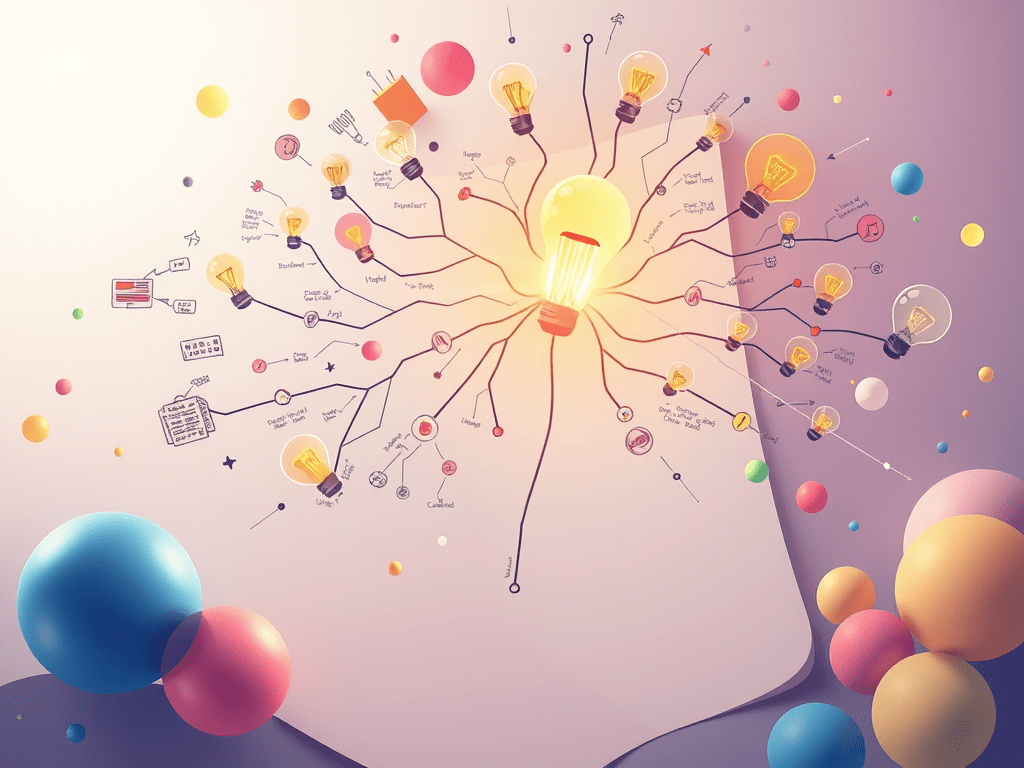
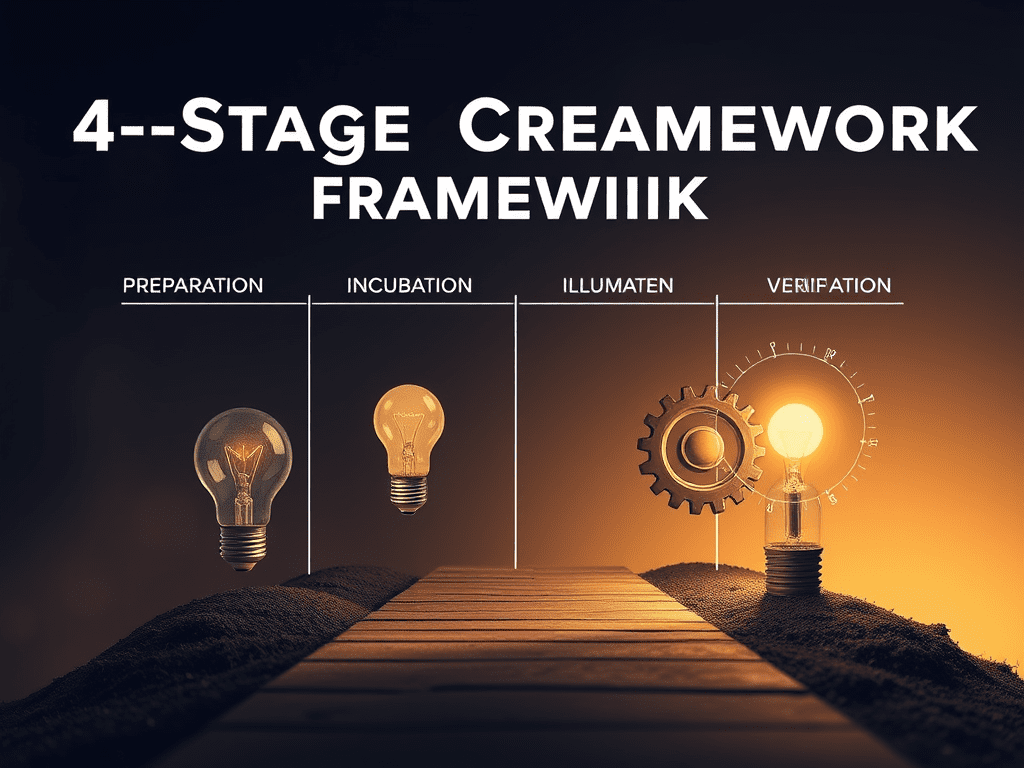
Innovation often springs from the unexpected convergence of disparate ideas. In this pillar guide, you’ll learn how to harness the power of conceptual blending to combine unrelated concepts into breakthrough solutions. Whether you’re a product designer, entrepreneur, or creative professional, mastering the art of conceptual blending equips you to push boundaries, fuel ideation, and catalyze transformative innovation.
Conceptual Blending Explained: 3 Foundational Principles
At its core, conceptual blending is a cognitive process that merges two or more input spaces—distinct domains of knowledge—into a coherent, novel mental model. By understanding why and how this fusion happens, you’ll gain a strategic framework for generating ideas that defy conventional categorization.
Definition and Importance of Conceptual Blending
Conceptual blending (also known as idea integration) is the mental mechanism by which our minds selectively combine elements from unrelated domains to form new, meaningful constructs. Unlike simple analogy or metaphor, blending forges a hybrid “blend space” that inherits structure from each input, yielding insights or products that neither domain could produce alone. This process underlies many of history’s greatest innovations—from the printing press (merging movable type with binding techniques) to modern smartphones (fusing computing, telephony, and multimedia). Recognizing the definition and importance of conceptual blending is the first step in mastering how combining unrelated ideas drives real-world innovation.
Cognitive Science Underpinnings of Idea Integration
Decades of research in cognitive linguistics and psychology reveal that conceptual blending leverages neural pathways optimized for pattern recognition. When we encounter two disparate inputs, our brains automatically seek commonalities—structural or functional—activating associative networks that facilitate creative leaps. Key insights include:
- Schema Matching: Our minds use pre‑existing schemas to map roles and relations between inputs, simplifying complex integrations.
- Selective Projection: Only salient features of each domain are projected into the blend, ensuring relevance and coherence.
- Mental Simulation: We mentally simulate potential blends, discarding incoherent combinations and iterating toward viable concepts.
Understanding these cognitive underpinnings empowers innovators to design exercises and environments that prime the brain for cross‑domain synthesis.
3 Key Components of a Successful Blend
Every effective conceptual blend relies on three interlocking spaces: the Input Spaces, the Generic Space, and the Blend Space. Mastery of these components ensures your idea integration efforts are structured, scalable, and repeatable.
Input Spaces: Exploring Source Domains
Input Spaces are the distinct knowledge areas or contexts you draw from—such as biology, music, or software engineering. Carefully selecting input domains with complementary or contrasting properties maximizes the creative tension necessary for robust blends. Tips for choosing inputs:
- Look for domains with strong, well‑defined structures.
- Prioritize areas where you have domain expertise or access to expert collaborators.
- Consider both functional (how it works) and metaphorical (what it represents) aspects.
Generic Space: Identifying Common Structures
The Generic Space captures the abstracted relationships and patterns shared by your input spaces. For example, both an ecosystem and a corporate hierarchy have roles (species vs. teams), interactions (predation vs. competition), and resource flows. Identifying these parallels provides the scaffolding on which novel blends are built. To map the Generic Space:
- Create a high‑level concept map of each domain.
- Spot overlapping functions or dynamics (e.g., feedback loops, resource exchange).
- Synthesize these overlaps into universal principles guiding your blend.
Blend Space: Generating Novel Outputs
The Blend Space is where real innovation emerges. By selectively projecting features from the Input Spaces and instantiated in the Generic Space framework, you form a new mental model that transcends the original domains. This hybrid concept can then be prototyped, tested, and iterated. Features of a strong Blend Space include:
- Surprising Synergy: The blend yields capabilities or insights neither input offers alone.
- Coherence: Despite novelty, the blend feels intuitive and defendable.
- Scalability: The concept can be expanded or applied across contexts.
By mastering these three foundational principles—Input Spaces, Generic Space, and Blend Space—you set the stage for systematic innovation through conceptual blending.
Combining unrelated ideas fuels innovation by breaking cognitive boundaries and forging fresh perspectives. In this section, we’ll explore the psychological mechanisms that enable creative breakthroughs, the tangible benefits of cross‑domain idea integration, and how metaphors and analogies act as catalysts for powerful conceptual blends.
The Psychology Behind Creative Breakthroughs
At the neural level, conceptual blending activates the brain’s default mode network, fostering divergent thinking and enabling connections between remote concepts. When we deliberately juxtapose unrelated inputs—such as art and engineering—we trigger associative networks that prime the mind for novel insights.
- Associative Network Activation: Blending disparate domains stimulates neural pathways that aren’t typically co‑activated, expanding the range of ideation.
- Defocused Attention: Reducing analytical focus during brainstorming (for example, free‑writing or sketching) allows subconscious processes to integrate ideas serendipitously.
- Incubation Effect: Stepping away from a challenge gives the brain time to recombine existing knowledge, often yielding “aha” moments upon return.
Design your innovation workflow to include short breaks, mind‑wandering sessions, and exposure to diverse stimuli—such as reading fiction or exploring nature—to leverage these psychological drivers and maximize creative potential.
Benefits of Cross‑Domain Idea Integration
Cross‑domain idea integration—strategically combining elements from different fields—yields breakthrough solutions and competitive advantages. By harnessing conceptual blending, teams and individuals can:
- Generate Breakthrough Solutions: Hybrid ideas address complex problems by uniting complementary strengths of each domain.
- Enhance Competitive Differentiation: Products or services born from unconventional blends stand out in saturated markets.
- Promote Organizational Learning: Exposure to multiple disciplines fosters transferable skills and collective intelligence.
- Mitigate Risk: Anchoring innovation in proven methods from each field reduces uncertainty and accelerates validation.
For instance, combining principles of behavioral economics with user‑experience design has led to interfaces that intuitively guide user behavior, improving conversion rates without intrusive tactics. Such success stories illustrate how idea integration transcends silos and drives sustainable innovation.
To capitalize on these benefits, establish interdisciplinary teams, rotate roles across projects, and hold “blend labs” where participants propose solutions by merging two unrelated concepts.
Role of Metaphors and Analogies in Creativity
Metaphors and analogies are powerful tools for making abstract concepts tangible and inspiring fresh angles on entrenched challenges. By mapping familiar structures onto new contexts, they enable innovators to visualize and prototype hybrid solutions effectively.
- Simplification: Translating a complex system into a metaphor—like comparing data flow to water pipes—clarifies functionality and pinpoints bottlenecks.
- Perspective Shifts: Viewing a business model as an ecosystem reveals interdependencies and potential feedback loops.
- Idea Scaffold: Analogies offer a structural framework, such as modeling customer journeys on travel itineraries to design seamless user experiences.
To harness metaphors and analogies:
- Select source domains rich in vivid imagery and well‑understood dynamics.
- Ensure structural alignment by mapping roles, relationships, and flows between source and target.
- Iterate on metaphor‑driven prototypes, testing for both coherence and novelty.
By embedding figurative thinking into your innovation toolkit, you amplify the impact of conceptual blending, transforming abstract inspiration into concrete, actionable breakthroughs.
A Step‑By‑Step Guide to Mastering Conceptual Blending
This practical roadmap breaks down the conceptual blending process into four actionable steps. By following these how‑to instructions, you’ll learn how to systematically combine unrelated ideas, use proven blending techniques, and refine your innovative concepts for real‑world impact.
Step 1: Identifying and Selecting Input Domains
The foundation of effective conceptual blending lies in choosing the right input domains. Seek fields that offer complementary or contrasting characteristics to spark creative tension.
- Relevance to Challenge: Prioritize domains whose features address core aspects of your problem.
- Diversity of Perspective: Mix technical, artistic, and social disciplines to unlock cross‑domain idea integration.
- Availability of Data and Expertise: Ensure you can access case studies, research, or collaborators in each field.
- Degree of Novelty: Balance familiar domains (to ensure coherence) with more distant ones (to maximize surprise).
For example, combining principles from environmental science and urban planning might yield sustainable city‑design concepts, while integrating choreography and user experience design could inspire more fluid digital interfaces.
Step 2: Mapping Relationships Between Ideas
Once you’ve selected input spaces, the next step is to map how their elements align or diverge. This relationship mapping uncovers structural parallels and functional overlaps that will guide your blend.
- Concept Mapping: Create side‑by‑side diagrams of key elements—actors, processes, and outcomes—in each domain.
- Attribute Listing: List characteristics (e.g., speed, flexibility, resilience) of each input and look for complementary pairs.
- Opposition Analysis: Identify contrasts (e.g., rigidity vs. adaptability) that could produce creative tension.
- Workshop Collaboration: Use whiteboard sessions or digital tools to involve team members in visualizing connections.
This systematic mapping ensures that your blend is grounded in a logical framework, increasing the likelihood of coherent and actionable innovation.
Step 3: Executing Blend Techniques
With mapped relationships in hand, employ structured blending techniques to generate initial ideas. These methods channel creative energy into deliberate, repeatable exercises.
Forced Connection Exercises
Forced connections compel your mind to link seemingly unrelated concepts, breaking habitual thinking patterns.
- Random Word Pairing: Use a word generator or index cards to pair domain‑specific terms unexpectedly.
- Attribute Matrix: Create a grid where rows represent features of Domain A and columns features of Domain B; brainstorm a blend for each cell.
- SCAMPER Variations: Apply “Substitute,” “Combine,” “Adapt,” “Modify,” “Put to another use,” “Eliminate,” and “Reverse” to one input space using elements of the other.
By forcing these connections, you generate a rich idea pool that can be refined in subsequent steps.
Analogy‑Driven Brainstorming
Analogies help translate structures from a familiar domain into your target context, offering a scaffold for novel solutions.
- Select a Strong Analogy: Choose a system—like a beehive, orchestra, or supply chain—with clear roles and interactions.
- Map Components: Align roles (e.g., worker bees to front‑line employees), processes (pollen collection to data gathering), and metrics (hive health to customer satisfaction).
- Ideate Variations: Brainstorm how metaphorical behaviors—such as hive communication via pheromones—could translate into digital notifications or team alerts.
Analogy‑driven brainstorming preserves coherence by grounding your blend in a familiar mental model while still driving innovation.
Step 4: Refining and Evaluating Blended Concepts
After generating a suite of blended ideas, refine them through iterative evaluation. This ensures each concept is both novel and viable.
- Feasibility Assessment: Evaluate technical, financial, and operational constraints for each blend.
- Coherence Check: Ensure the blended concept makes intuitive sense by testing it with stakeholders or end users.
- Prototype and Test: Build low‑fidelity models—sketches, mock‑ups, role‑plays—and gather feedback on functionality and appeal.
- Criteria Ranking: Score ideas against factors like impact potential, ease of implementation, and strategic alignment.
- Iteration Loop: Incorporate insights from testing into successive blend cycles, gradually enhancing novelty and robustness.
By rigorously refining and evaluating your blended concepts, you transform raw creative sparks into polished innovations ready for deployment.
5 Powerful Tools and Frameworks for Blending Ideas
Equipping your innovation practice with the right tools and frameworks accelerates conceptual blending and transforms abstract ideas into actionable concepts. In this section, we’ll examine five proven resources—from digital platforms to structured methodologies—that streamline idea integration and foster breakthrough thinking.
Digital Innovation Tools to Enhance Conceptual Blending
Modern software solutions provide dynamic environments for mapping, visualizing, and iterating blended concepts. By leveraging these digital innovation tools, teams can collaborate in real time, track idea evolution, and anchor creative sessions in data.
- Mind‑Mapping Platforms (e.g., MindMeister, XMind): Enable you to visually organize Input Spaces and Generic Space elements, then drag-and-drop links to prototype Blend Spaces.
- Virtual Whiteboards (e.g., Miro, MURAL): Support synchronous and asynchronous brainstorming. Use templates to structure relationship mapping and forced connection exercises.
- Innovation Management Suites (e.g., IdeaScale, Brightidea): Aggregate suggestions from distributed teams, facilitate peer voting, and track concept maturity through configurable workflows.
- AI‑Assisted Brainstorming (e.g., ChatGPT, Jasper AI): Provide seed ideas, generate analogies, and suggest alternative input domains—jump‑starting your blend without compromising creative ownership.
Integrate these tools into your innovation process to maintain momentum, capture diverse inputs, and iterate rapidly on blended prototypes.
Collaborative Workshop Formats
Structured workshops create dedicated spaces for interdisciplinary teams to apply blending techniques. Below are two high‑impact formats that facilitate idea integration through guided, hands‑on activities.
Brainwriting Sessions for Diverse Input
Brainwriting is a silent, written‑idea exchange that minimizes groupthink and amplifies individual creativity. Its core steps include:
- Idea Capture: Each participant writes 3–5 concepts on index cards or digital notes, drawing from their respective domains.
- Rotation Rounds: Cards circulate every 3–4 minutes, with each contributor adding enhancements or blending suggestions.
- Aggregation and Discussion: After multiple rotations, the facilitator groups similar blends and leads a review to identify top candidates.
This format ensures equitable participation, surfaces hidden insights, and fosters cross‑domain integration without the biases of verbal dominance.
SCAMPER Method to Systematically Blend Ideas
SCAMPER—an acronym for Substitute, Combine, Adapt, Modify, Put to another use, Eliminate, Reverse—is a checklist framework that systematically prompts new perspectives:
- Substitute: Swap elements from Domain A with those from Domain B (e.g., replace traditional materials with biodegradable alternatives).
- Combine: Merge two functions or processes to create hybrid features (e.g., a fitness tracker that also serves as a hydration reminder).
- Adapt: Borrow successful models from one field and tailor them to another (e.g., adapting agile sprint cycles for marketing campaign development).
- Modify: Alter scale, shape, or attributes—think miniaturized devices or amplified user feedback loops.
- Put to Another Use: Repurpose an existing product or method for a new audience (e.g., using gamification mechanics in corporate training).
- Eliminate: Remove non‑essential components to streamline functionality or reduce cost.
- Reverse: Flip processes or roles—such as allowing customers to design their own packaging.
By cycling through SCAMPER prompts, teams methodically explore varied blend permutations, ensuring comprehensive coverage of possible innovations.
Innovation Frameworks: From Design Thinking to TRIZ
Beyond ad hoc tools, established innovation frameworks offer end‑to‑end processes for idea integration. Here are three leading methodologies that incorporate conceptual blending principles:
- Design Thinking: Emphasizes human‑centered research, problem framing, ideation, prototyping, and testing. By embedding empathy and iterative feedback, it aligns blended concepts with real user needs.
- Lean Startup: Focuses on Build-Measure-Learn loops. Rapid prototyping of blended ideas, coupled with validated learning, minimizes waste and accelerates market‑fit discovery.
- TRIZ (Theory of Inventive Problem Solving): A Russian‑developed system that codifies 40 inventive principles—such as segmentation, universality, and inversion—that serve as advanced blending patterns to resolve contradictions.
Each framework provides a structured journey from concept to implementation, ensuring that blended ideas are not only novel but also viable and user‑aligned.
By combining these five powerful tools and frameworks—digital innovation platforms, collaborative workshops, and established methodologies—you create a robust ecosystem for conceptual blending. This blended toolkit empowers innovators to generate high‑impact ideas, validate them efficiently, and sustain a culture of breakthrough thinking.
Case Studies: 4 Innovative Blends That Transformed Industries
Examining real‑world examples of conceptual blending reveals how targeted idea integration drives industry‑shaping breakthroughs. These four case studies—from technology titans to design‑driven innovators—demonstrate how strategic fusion of unrelated domains produces products and business models that redefine markets.
Technology Sector: Cross‑Industry Synergies
By merging capabilities from distinct tech and service domains, companies have created entirely new value propositions that competitors struggle to replicate.
Case Study: Airbnb’s Blend of Hospitality and Technology
Airbnb’s founders combined the traditional hospitality model—short‑term lodging—with peer‑to‑peer marketplace technology to unlock unused residential space worldwide. Key blend features include:
- Digital Platform Infrastructure: Seamless listings, booking, and payment systems drawn from e‑commerce best practices.
- User‑Generated Trust Mechanisms: Host and guest reviews, identity verification, and secure messaging borrowed from social networks.
- Localized Experience Curation: Integration of travel‑guide style content and community recommendations to enhance guest immersion.
This hybrid approach transformed everyday homes into global hospitality assets, fueling Airbnb’s rapid scale to over 4 million listings in 220+ countries without owning a single property.
Case Study: Tesla’s Energy and Automotive Fusion
Tesla’s innovation lies in integrating electric powertrain engineering with energy storage and software ecosystems to reinvent personal transportation:
- Battery Technology: Advanced lithium‑ion packs initially developed for consumer electronics, adapted for automotive range and safety.
- Vehicle‑Grid Integration: Bi‑directional charging and “vehicle‑to‑home” power backup systems merging smart‑grid concepts with car batteries.
- Over‑The‑Air Software Updates: Borrowed from mobile device ecosystems, enabling continuous feature enhancements and diagnostics.
By blending renewable energy solutions with automotive design, Tesla disrupted both sectors—accelerating EV adoption and laying groundwork for home energy management systems.
Design Thinking Wins: Creative Product Innovations
Design‑led firms excel at blending human‑centered insights with engineering prowess to produce intuitive, emotionally resonant products.
- Nest Thermostat: Merged industrial design aesthetics (inspired by high‑end audio knobs) with machine‑learning algorithms to create a self‑programming home thermostat that learns user patterns and optimizes energy use.
- Dyson Airblade: Combined high‑speed centrifugal motor technology (from industrial vacuum cleaners) with aerodynamic hand‑drying design to reduce dry time and hygiene risks in public restrooms.
- Apple Watch: Integrated traditional Swiss watch heritage—luxury materials and craftsmanship—with cutting‑edge biometric sensors and iOS connectivity to position a wearable as both fashion accessory and health device.
Each of these products demonstrates how analogies—from audio equipment to restroom fixtures to watchmaking—can scaffold design thinking exercises, yielding innovations that feel both familiar and groundbreaking.
Business Model Reinventions Through Conceptual Blending
Beyond product design, blending ideas across business models has enabled companies to reconfigure value chains and capture new markets.
- Netflix: Fused postal‑DVD rental logistics with streaming‑on‑demand technology, then eliminated physical media altogether to pioneer subscription‑based video delivery.
- Uber: Blended smartphone GPS and payment technology with taxi‑service logistics, creating the ride‑hailing model that disrupted urban transportation.
- Dollar Shave Club: Married consumer packaged goods marketing with direct‑to‑consumer e‑commerce subscriptions, making high‑quality razors affordable and convenient.
- Patreon: Combined crowdfunding mechanisms with membership platforms, enabling creators to secure recurring revenue directly from fans rather than rely on ad‑driven models.
These business model hybrids demonstrate that conceptual blending extends beyond product ideation, enabling organizations to rethink distribution, revenue capture, and customer engagement strategies for lasting competitive advantage.
Advanced Strategies to Sustain Creative Momentum
Maintaining the energy of conceptual blending beyond initial ideation requires deliberate practices, cultural reinforcement, and forward‑looking tools. In this section, we’ll explore four advanced strategies—from mindset cultivation to AI‑assisted blending—that ensure your organization continues combining unrelated ideas for innovation over the long haul.
Cultivating a Blend‑Ready Mindset in Teams
A blend‑ready mindset prioritizes openness, curiosity, and psychological safety—essential conditions for sustained creativity. To foster this culture:
- Embed Learning Rituals: Host regular “Cross‑Pollination” sessions where team members present insights from their domains—marketing shares consumer trends, engineers discuss new materials, designers reveal emerging aesthetics.
- Encourage Question‑Based Exploration: Frame challenges as “How might we…” questions that invite multiple perspectives rather than closed‑ended tasks.
- Reward Risk‑Taking: Recognize attempts at conceptual blends—even those that don’t immediately yield results—to reinforce a culture that values experimentation over safe, incremental tweaks.
- Provide Access to Diverse Stimuli: Curate a library of resources—books, articles, museum passes, industry reports—from unrelated fields to spark serendipitous connections.
By institutionalizing these practices, teams shift from ad hoc brainstorming to a continuous innovation mindset, making conceptual blending a core competency rather than a one‑off exercise.
Overcoming Cognitive Biases and Mental Blocks
Even seasoned innovators encounter biases and blocks that stifle the fusion of unrelated ideas. Advanced techniques help teams recognize and circumvent these obstacles:
- Bias Identification Workshops: Use structured exercises to surface common biases—confirmation bias, functional fixedness, groupthink—and discuss real cases where they derailed innovation.
- Role‑Reversal Exercises: Assign team members to champion the “opposite” viewpoint (e.g., the skeptic vs. the visionary), ensuring that blends are stress‑tested from multiple angles.
- Silent Brainstorming Rounds: Rotate between silent ideation and group critique to minimize anchoring effects and reduce dominance by vocal participants.
- Mindfulness and Incubation Breaks: Introduce short, guided mindfulness or “walk and reflect” sessions during workshops to allow subconscious processing and reset analytical traps.
These advanced interventions help preserve creative flow, enabling consistent generation of high‑novelty blends despite natural cognitive constraints.
Scaling Conceptual Blending for Organizational Innovation
To move from isolated creative pockets to enterprise‑wide innovation, organizations must embed conceptual blending into structures, processes, and metrics:
- Innovation Playbooks: Document proven blending methodologies—step‑by‑step guides, tool recommendations, case studies—and distribute them across departments.
- Blend Champions Network: Nominate and train “blend champions” in each business unit to mentor peers, facilitate workshops, and collect best practices.
- KPIs for Creative Output: Measure both quantity (number of blend ideas generated) and quality (patents filed, prototypes launched, revenue from hybrid offerings) to track progress.
- Integrated Collaboration Platforms: Leverage enterprise social networks or dedicated innovation portals to share raw inputs, generic space analyses, and blend space prototypes, creating transparency and accelerating cross‑functional synergy.
By operationalizing conceptual blending at scale, you transform it from a team‑level tactic into a strategic lever that fuels sustained competitive advantage.
Future Trends: AI‑Assisted Blending and Beyond
Emerging technologies promise to augment human creativity by accelerating the blending of unrelated ideas. Key developments include:
- Generative AI for Input Discovery: AI models can suggest unconventional input domains by analyzing vast datasets of patents, research papers, and cultural artifacts, uncovering cross‑domain links humans may overlook.
- Automated Analogical Mapping: Advanced NLP tools identify structural parallels between source and target domains, generating analogy scaffolds that streamline blend space formation.
- Collaborative AI Co‑Creativity: Interactive agents that participate in brainstorming sessions—proposing forced connections, critiquing blends for coherence, or simulating user reactions—thus amplifying human ideation bandwidth.
- Virtual and Augmented Reality Labs: Immersive environments where teams can manipulate 3D representations of input spaces and witness real‑time blend visualizations, enhancing spatial reasoning in idea integration.
While these tools won’t replace human insight, they will redefine how quickly and at what scale we can combine unrelated ideas for innovation. Organizations that experiment early with AI‑assisted blending will gain a decisive edge in creative velocity and breakthrough potential.
By integrating these advanced strategies—mindset cultivation, bias mitigation, organizational scaling, and emerging AI tools—you ensure that conceptual blending remains a dynamic, sustainable force within your innovation ecosystem. This continuous commitment to combining unrelated ideas primes your team to consistently generate, refine, and implement the next wave of transformative breakthroughs.
Discover more from Alchem Learning
Subscribe to get the latest posts sent to your email.