Unlocking the secrets of the creative process and mastering effective idea incubation requires more than inspiration—it demands a structured approach that balances imagination with strategy. In this comprehensive guide, we explore foundational concepts, proven methodologies, and psychological insights to help innovators, artists, and entrepreneurs transform raw ideas into groundbreaking solutions. Whether you’re a seasoned creator or embarking on your first ideation journey, understanding the pillars that underpin creativity will empower you to generate, nurture, and execute ideas with confidence and clarity.
Demystifying Creativity: 3 Pillars of Effective Idea Incubation
Before diving into specific techniques, it’s essential to frame creativity as a systematic process rather than a mysterious spark. These three pillars—Defining Creativity and Ideation, Understanding the Creative Mind, and Debunking Common Creativity Myths—provide the scaffolding for a robust idea incubation strategy. By mastering each pillar, you lay the groundwork for a repeatable, scalable creative workflow that fuels consistent innovation.
Pillar 1: Defining Creativity and Ideation
Creativity is often conflated with random flashes of genius, but at its core, it involves generating novel and valuable ideas—also known as ideation. Clarifying these terms ensures you approach your creative process with precision:
- Creativity: The ability to combine existing elements in unique ways to produce something both original and useful.
- Ideation: The deliberate generation of ideas through structured exercises and brainstorming techniques.
By distinguishing between creativity and ideation, you can deploy targeted strategies. For instance, ideation sessions leverage divergent thinking to flood the mind with options, while creativity encompasses both divergence and convergence—filtering and refining those options into a viable concept.
Pillar 2: Understanding the Creative Mind
An effective creative process rests on insights from cognitive psychology and neuroscience. The human brain alternates between two complementary modes:
- Divergent Thinking: An expansive mode that explores multiple possibilities, encourages risk-taking, and thrives on curiosity.
- Convergent Thinking: A focused mode that evaluates, selects, and refines ideas based on criteria like feasibility and impact.
Research shows that deliberate shifts between these modes—often during structured incubation periods—lead to more breakthrough ideas. Understanding how attention, memory, and subconscious processing influence ideation helps you design workflows that maximize creative output. For example:
- Incorporate short gaps of rest or “incubation walks” to allow unconscious processing.
- Use prompts or sensory stimuli to trigger remote associations in divergent phases.
- Apply checklists or evaluation matrices during convergent phases to ensure idea viability.
Pillar 3: Debunking Common Creativity Myths
Myths about creativity can derail your incubation efforts by fostering misconceptions and self-doubt. Let’s dispel three prevalent myths:
- Myth 1: “Creativity Is Innate and Unteachable.”Fact: While certain personality traits correlate with creativity, anyone can develop creative skills through deliberate practice and exposure to diverse stimuli.
- Myth 2: “You Need Complete Silence or Isolation.”Fact: Environments rich in collaboration and cross-pollination often spark more ideas than isolated settings. Balance solitude with group ideation sessions.
- Myth 3: “Creativity Should Never Be Structured.”Fact: Paradoxically, constraints—such as time limits or resource boundaries—can enhance creativity by forcing you to think resourcefully.
By confronting these myths directly, you clear mental roadblocks and cultivate a growth-oriented mindset—essential for sustained creative performance and effective idea incubation.
Mindset Preparation: 4 Steps to Prime Your Brain for Innovation
Establishing the right mental framework is crucial for unlocking your creative potential and ensuring a smooth journey through idea incubation. By deliberately preparing your mindset, you create fertile ground for inspiration, resilience, and disciplined exploration. The following four steps—Cultivating a Growth Mindset, Overcoming Mental Blocks, Harnessing Thinking Modes, and Practicing Mindfulness—form a cohesive sequence to prime your brain for innovation and sustained creative output.
Step 1: Cultivating a Growth Mindset for Creative Breakthroughs
A growth mindset—the belief that abilities and intelligence can be developed through dedication and effort—serves as the foundation for creative confidence:
- Embrace Challenges: View unfamiliar problems as opportunities for learning rather than threats to your competence. Challenge promotes neural plasticity, fostering novel connections essential for ideation.
- Welcome Feedback: Treat constructive criticism as a data point for refinement. Regularly solicit perspectives from peers or mentors to identify blind spots and sharpen your concept.
- Celebrate Effort Over Talent: Acknowledge the process of experimenting and iterating on ideas instead of fixating on innate “genius.” This reduces fear of failure and encourages risk-taking.
By reframing setbacks as progress, you cultivate resilience—transforming internal doubts into fuel for sustained creative exploration and more effective idea incubation.
Step 2: Overcoming Mental Blocks and Resistance
Even seasoned innovators encounter mental roadblocks—those stubborn barriers that stall ideation. Recognizing and dismantling these obstacles is essential for maintaining momentum:
- Identify Block Triggers: Keep a brief journal to note when you feel stuck. Common triggers include perfectionism, self-criticism, and decision fatigue.
- Use “Yes, And…” Technique: Borrowed from improvisational theater, this approach validates emerging ideas and builds upon them, countering the inner critic that often shuts down creativity.
- Time-Box Your Doubts: Allocate a fixed, short interval (e.g., 10 minutes) to explore your concerns. Once time’s up, pivot back to generative thinking to avoid rumination.
- Shift Your Environment: A quick change of scenery—stepping outside, rearranging your workspace, or switching to a different medium—can jolt your cognitive patterns and unblock stuck thoughts.
Proactively addressing mental resistance ensures that your incubation phase remains productive, allowing ideas to flow unimpeded from conception to refinement.
Step 3: Harnessing Divergent vs. Convergent Thinking
Effective idea incubation hinges on the deliberate alternation between divergent thinking (exploration) and convergent thinking (evaluation). Structuring these modes prevents premature judgment and maximizes the creativity of the process:
- Divergent Phase (Ideation):
- Quantity Over Quality: Brainstorm at least 20–30 ideas without critique to bolster originality.
- Provocative Prompts: Use random word associations or “what if?” scenarios to trigger out-of-the-box concepts.
- Incubation Interval:
- Rest and Recharge: Take a micro-break—listen to instrumental music or engage in light exercise—to let the subconscious process ideas.
- Unconscious Synthesis: During mundane tasks (e.g., showering), allow connections to form naturally without conscious effort.
- Convergent Phase (Refinement):
- Evaluation Matrix: Rate ideas based on criteria like feasibility, impact, and alignment with goals.
- Selective Pruning: Narrow down to top 3–5 concepts for deeper development, ensuring focus and resource efficiency.
By codifying these thinking modes into your creative process, you maintain a balance between expansive discovery and rigorous assessment—key to successful idea incubation.
Step 4: Practicing Mindfulness for Creative Clarity
Mindfulness—the nonjudgmental awareness of the present moment—sharpens focus, reduces stress, and enhances cognitive flexibility, all of which are vital for creativity:
- Daily Meditation: Spending 5–10 minutes on breath-focused meditation improves attention regulation and mitigates anxiety that can stifle ideation.
- Sensory Grounding: Conduct a quick sensory check-in (e.g., notice three things you see, hear, or feel). This practice calms racing thoughts and primes the mind for inspiration.
- Mindful Observation: Study ordinary objects or routine processes with curiosity—this habit uncovers hidden patterns and sparks novel connections.
- Journaling Prompts: Use reflective questions (“What intrigued me today?”, “Which assumptions can I challenge?”) to cultivate self-awareness and refine your creative intention.
Incorporating mindfulness into your daily routine clears mental clutter, deepens your engagement with ideas, and fosters the clarity necessary for the incubation stage to flourish.
7 Proven Techniques to Spark Innovative Ideas
Injecting fresh, high-impact ideas into your creative pipeline requires more than wishful thinking—it demands a toolkit of battle‑tested ideation techniques. Below are seven powerful methods designed to elevate divergent thinking, ignite breakthrough concepts, and supercharge your idea incubation process. Each technique includes practical guidance to help you apply it immediately and measure its effectiveness.
1. Brainstorming Frameworks: SCAMPER and Six Thinking Hats
Structured brainstorming systems provide focused pathways to explore possibilities and challenge assumptions:
- SCAMPER (Substitute, Combine, Adapt, Modify, Put to another use, Eliminate, Reverse):
- Substitute: What elements can you swap to yield a fresh perspective?
- Combine: Which ideas or components could merge to create synergistic solutions?
- Adapt: How might you tweak existing concepts to solve a new problem?
- Modify: What can be magnified or reduced to improve functionality?
- Put to another use: Can you repurpose an element beyond its traditional context?
- Eliminate: What constraints or features can be removed to simplify and focus?
- Reverse: How would the idea look if you inverted roles, processes, or sequences?
- Six Thinking Hats (Edward de Bono):
- White Hat: Focus on data, facts, and information gaps.
- Red Hat: Acknowledge emotions, hunches, and gut reactions.
- Black Hat: Critically evaluate risks, obstacles, and potential flaws.
- Yellow Hat: Highlight benefits, values, and optimistic possibilities.
- Green Hat: Cultivate creativity, alternatives, and out-of-the-box thinking.
- Blue Hat: Manage process, sequence, and next‑step planning.
Combining these frameworks ensures balanced exploration and timely convergence, preventing idea overload while maximizing creativity.
2. Mind Mapping Strategies for Visual Ideation
Mind mapping transforms linear thoughts into visual networks, unlocking remote associations and enhancing idea incubation:
- Core Concept: Place your central theme (e.g., “New Product Feature”) in the map’s center.
- Branching Out: Draw radiating branches for subthemes, using single keywords to maintain clarity.
- Color‑Coding & Icons: Apply distinct colors and simple icons to differentiate categories and trigger memory.
- Layering Depth: Add secondary and tertiary nodes for detailed exploration—each layer reveals deeper connections.
- Digital Tools: Leverage platforms like MindMeister or Coggle to collaborate in real time, seamlessly capturing evolving ideas.
By externalizing thoughts onto an expandable canvas, mind maps effectively bridge creative ideation and logical structuring, streamlining your incubation workflow.
3. Role Storming and Collaborative Ideation Sessions
Innovation often thrives in group settings where diverse perspectives collide. Role storming and team workshops break conventional mindsets:
- Role Storming: Participants adopt personas—such as a skeptical engineer or a visionary customer—and ideate through that lens.
- Empathy Mapping: Chart what different stakeholders say, think, feel, and do to uncover hidden needs and pain points.
- Time‑Boxed Sprints: Set short, intense brainstorming intervals (e.g., 15 minutes) to sustain energy and generate rapid-fire ideas.
- Diverse Teams: Mix functional backgrounds (marketing, design, engineering) to stimulate cross‑pollination of domain knowledge.
- Facilitated Debriefs: Conclude each session by clustering themes, naming patterns, and assigning next steps for idea incubation.
When managed effectively, collaborative sessions not only multiply ideation output but also strengthen team ownership and accelerate implementation.
4. Digital Tools for Capturing and Organizing Ideas
Maintaining a centralized, searchable idea repository is critical for sustained innovation. Digital platforms enable real‑time capture and lifelong incubation:
- Note‑Taking Apps: Use tools like Evernote or Notion to archive fleeting inspirations with tags, backlinks, and multimedia attachments.
- Kanban Boards: Platforms like Trello or Jira help visualize idea pipelines—from backlog through in‑progress to refinement stages.
- Voice‑to‑Text Recorders: Apps such as Otter.ai convert verbal brainstorms into editable transcripts, preserving raw creative energy.
- AI‑Assisted Brainstorming: Leverage generative AI tools (e.g., GPT‑powered assistants) to expand prompts, suggest alternatives, and overcome idea stagnation.
By integrating these digital solutions into your workflow, you automate idea capture, facilitate seamless collaboration, and ensure no valuable insight slips through the cracks.
5. Forced Connections and Random Stimuli
Intentionally combining unrelated elements—or introducing random stimuli—breaks habitual thought patterns and unlocks serendipitous insights:
- Attribute Listing: Decompose a concept into attributes (e.g., color, shape, function) and recombine them in novel ways.
- Random Word Generator: Pick an arbitrary word and force a connection to your challenge—this “semantic leap” often sparks unconventional ideas.
- Object Association: Select a physical object from your environment and brainstorm how its properties could inspire your project.
6. Analogical Thinking and Storyboarding
Drawing parallels between seemingly disparate domains enriches your idea incubation process with proven patterns and new perspectives:
- Analogies: Map the structure of a successful solution in one field (e.g., nature’s photosynthesis) onto your creative challenge.
- Storyboarding: Sketch sequential panels to visualize user journeys or process flows—this narrative approach reveals gaps and opportunities.
7. Constraint‑Driven Innovation
Paradoxically, well-defined constraints—such as tight budgets, strict deadlines, or material limits—fuel resourceful creativity:
- Time Constraints: Impose a strict timer to compel rapid decision‑making and prevent overthinking.
- Resource Limits: Challenge yourself to use only three tools or two materials—this spurs inventive problem-solving.
- Scope Boundaries: Define non‑negotiable project goals to focus ideation on what truly matters.
By embracing limitations as creative catalysts, you transform boundaries into springboards for breakthrough innovations and ensure your idea incubation delivers actionable results.
Incubation in Action: Nurturing Ideas to Fruition
Once you’ve generated a wealth of raw ideas, the incubation phase bridges the gap between conception and tangible insight. Effective incubation leverages the brain’s unconscious processing to deepen understanding, refine concepts, and reveal unexpected connections. In this section, we explore the science behind incubation, actionable techniques to foster productive subconscious work, and structured methods for evaluating and sharpening your initial ideas.
The Science of Unconscious Processing in Creativity
Incubation harnesses your brain’s innate capacity to process information outside conscious awareness. Decades of cognitive research validate that stepping away from a problem often leads to “aha” moments later on:
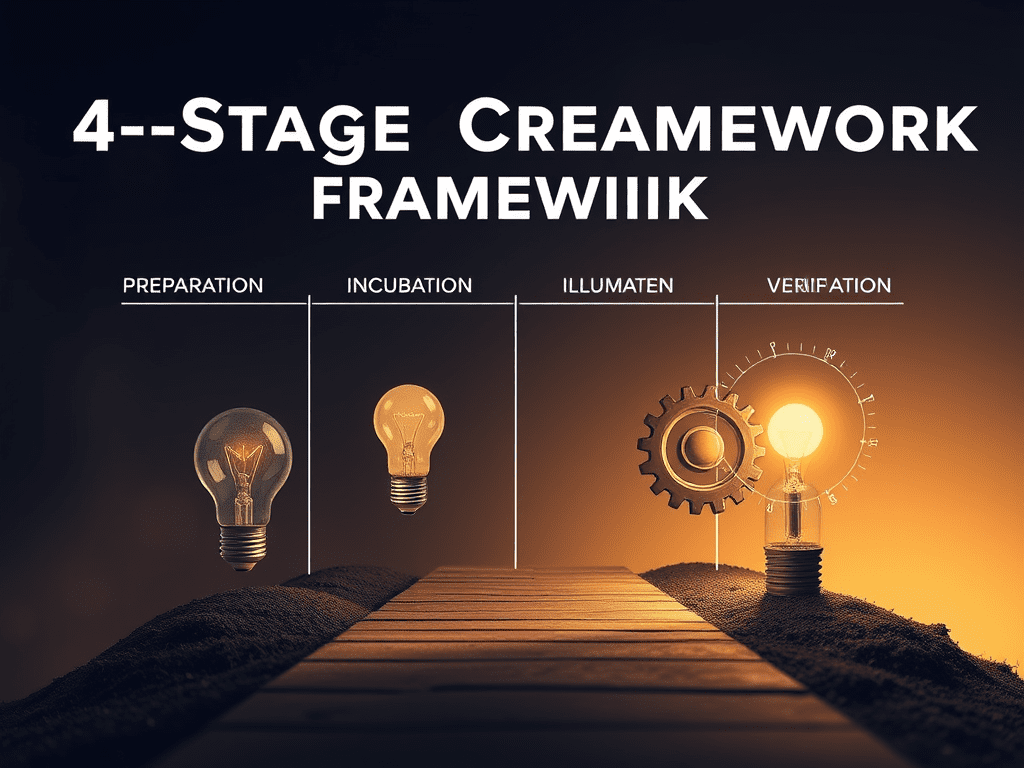
- Incubation Effect: Pioneering studies by Graham Wallas (1926) describe creativity as a four-stage process—preparation, incubation, illumination, and verification—highlighting the incubation stage as crucial for subconscious synthesis.
- Default Mode Network (DMN): Neuroscientific research shows that when the brain is at rest, the DMN activates, enabling remote associations and spontaneous idea recombination without deliberate focus.
- Sleep and Creativity: REM sleep, in particular, has been linked to enhanced problem-solving and insight generation, as the brain consolidates memories and forges new neural pathways.
By understanding these mechanisms, you can intentionally integrate breaks, rest, and divergent activities into your workflow—transforming idle moments into powerful incubators for innovation.
Techniques for Productive Incubation: From Daydream to Research
Translating the science of unconscious processing into practice involves creating conditions that encourage mind-wandering, exploration, and low-stakes experimentation:
- Scheduled Downtime: Block 15–30 minutes daily for undirected activities—such as walking, showering, or listening to instrumental music—to trigger DMN activation and subconscious idea refinement.
- Daydream Prompts: Keep a simple prompt sheet nearby (e.g., “What if…?”, “How might we…?”, or “Imagine a world where…?”) and allow your mind to wander freely around these questions without judgment.
- Incubation Journals: Instead of formal note-taking, jot down fleeting impressions, sketches, or metaphors as they arise during downtime. These informal artifacts often contain the seeds of transformative concepts.
- Targeted Research Bursts: After initial ideation, allocate short research sprints (10–15 minutes) to explore related fields, historical analogues, or scientific studies. This cross-disciplinary input enriches your subconscious reservoir.
- Physical Change of Scenery: Move to a different workspace or take your notebook to a café, park, or museum. Novel environments stimulate new neural pathways and fresh perspectives.
Implementing these techniques ensures that incubation is not passive but an active phase of idea development—balancing mindless mental drift with light structure and curiosity-driven exploration.
Evaluating and Refining Initial Concepts
After your unconscious mind surfaces promising ideas, the next step is systematic evaluation and refinement. This convergent phase transforms raw concepts into actionable designs or strategies:
Criteria for Idea Viability and Feasibility
- Alignment With Goals: Assess whether each idea supports your overarching objectives—be they innovation targets, user needs, or business metrics.
- Technical Feasibility: Determine if you possess or can acquire the resources, skills, and technologies necessary to realize the concept within constraints.
- Market Potential: Research competitive landscapes and user personas to gauge demand, differentiators, and potential adoption barriers.
- Scalability and Sustainability: Evaluate long-term viability by considering resource requirements, maintenance costs, and scalability of processes involved.
- Emotional Resonance: Use empathy maps or user testing prototypes to validate that the idea resonates emotionally with target audiences and addresses real pain points.
- Risk Assessment: Identify potential legal, ethical, or operational risks and devise mitigation strategies to ensure responsible innovation.
Integrating Incubation Into Your Workflow
To maximize the benefits of incubation, embed it into your routine rather than treating it as an afterthought:
- Incubation Calendar: Schedule regular “incubation slots” in your project timeline—distinct from ideation and execution phases—to guard against rushed convergence.
- Feedback Loops: Share interim ideas with trusted peers or mentors during incubation to gather diverse perspectives that enrich subconscious processing.
- Iterative Checkpoints: Alternate between incubation and evaluation on a weekly cadence, allowing iterations of subconscious insight and structured refinement to co-evolve.
- Documentation Rituals: Archive both raw incubation notes and refined evaluation records in a centralized repository to trace idea evolution and inform future projects.
By treating incubation as a deliberate, recurring stage—complete with techniques, timing, and evaluation—your creative process becomes both systematic and adaptable. This disciplined approach nurtures ideas from fuzzy concepts to polished innovations ready for execution.
Execution Essentials: Turning Concepts into Reality
Transitioning from polished ideas to tangible outcomes is the critical execution phase of the creative process. By integrating rapid prototyping, iterative feedback loops, and strategic planning, you ensure that your idea incubation efforts culminate in successful products, services, or campaigns. This section outlines essential methodologies to validate concepts quickly, refine through continuous improvement, and plan effectively for a seamless launch.
Rapid Prototyping Techniques for Quick Validation
Rapid prototyping accelerates idea validation by creating low‑fidelity versions of your concept, enabling you to test assumptions and gather user insights with minimal investment:
- Paper Prototypes: Sketch interfaces, user flows, or product diagrams on paper or whiteboards. These tactile mockups facilitate early feedback on basic structure and functionality.
- Clickable Wireframes: Use tools like Figma or Adobe XD to build simple, navigable screens that simulate user interactions. This approach balances speed with sufficient detail for usability testing.
- 3D-Printed Models: For physical products, employ desktop 3D printers to create basic form factors. Even rough prototypes reveal ergonomic issues and material considerations.
- Wizard of Oz Prototypes: Manually simulate backend functions or AI features behind the scenes. This “smoke-and-mirrors” approach tests user experience before investing in complex development.
- MVP Development: Build a minimal viable product with core features only. Launch to a small user group to measure engagement metrics and validate market fit.
By deploying these prototyping techniques within days or weeks—not months—you rapidly identify design flaws, confirm viability, and prioritize features that matter most, keeping your creative workflow lean and focused.
Iterative Feedback Loops and Improvement Cycles
Embedding structured feedback loops into your development process ensures continuous refinement of your concept, enhancing quality and user satisfaction:
- User Testing Sessions: Conduct short, moderated sessions with representative users to observe interactions, gather qualitative feedback, and uncover friction points.
- Surveys and Analytics: Distribute targeted surveys post-prototype demo and analyze engagement data (e.g., click-through rates, task completion times) to quantify user preferences.
- Design Sprints: Follow the Google Ventures five-day sprint model—understand, sketch, decide, prototype, test—to rapidly cycle through ideation and validation phases.
- Peer Review Workshops: Invite cross-functional team members to critique prototypes, focusing on usability, aesthetics, and technical feasibility in a collaborative setting.
- Version Control and Documentation: Use Git or similar tools to track changes, document decision rationales, and maintain a clear history of iterations for transparency and future reference.
Effective feedback loops balance speed and depth—short cycles allow quick corrections, while deeper rounds tackle complex issues. Over successive iterations, your prototypes evolve into robust solutions aligned with user needs and business objectives.
Strategic Planning: From Prototype to Launch
Launching a refined prototype requires a comprehensive strategic plan that aligns resources, timelines, and stakeholder expectations. A clear roadmap prevents common execution pitfalls and maximizes the impact of your idea incubation efforts.
Time Management and Resource Allocation Strategies
- Milestone Roadmap: Break down the project into key phases—prototype refinement, pilot testing, final development, and launch. Assign dates and deliverables for each milestone to maintain momentum.
- RACI Matrix: Define Roles (Responsible), Accountability, Consultation, and Information for all tasks. This clarity prevents overlap, reduces bottlenecks, and ensures accountability across disciplines.
- Risk Buffering: Allocate contingency time (e.g., 10–20% of total schedule) for unforeseen technical or regulatory hurdles, mitigating delays and scope creep.
- Budgeting and Cost Tracking: Estimate costs for development, testing, marketing, and post-launch support. Use expense-tracking tools to monitor burn rate against allocated budget in real time.
- Resource Pooling: Identify required skill sets—UI/UX designers, developers, product managers—and secure commitments early. Consider flexible resourcing strategies like contractors or cross-training existing staff for scalability.
- Communication Cadence: Establish regular check‑ins (e.g., weekly stand-ups, bi‑weekly demos) to synchronize team progress, surface issues early, and celebrate incremental wins.
- Quality Assurance Plan: Integrate unit testing, user acceptance testing (UAT), and performance benchmarks into your timeline. Early detection of defects reduces rework and enhances reliability.
By meticulously planning timeframes and resource distribution, you create a resilient execution strategy that transforms prototypes into market-ready offerings without sacrificing speed or quality.
Sustaining Momentum: Strategies for Continuous Creative Growth
Maintaining creative momentum beyond a single project requires deliberate strategies that foster continual inspiration, disciplined practice, and honest self‑assessment. By embedding sustainable routines, tapping into diverse knowledge domains, and measuring your creative performance, you transform sporadic bursts of innovation into an enduring, high‑velocity cycle of idea incubation and execution. The following tactics provide a roadmap for lifelong creative growth.
Establishing a Creative Routine and Inspiring Environment
Consistency is the cornerstone of sustained creativity. A well‑crafted routine primes your mind to enter a creative state on demand, while an optimized environment reinforces focus and imaginative exploration:
- Daily Creative Rituals: Allocate a fixed time each day for “creative warm‑ups” such as freewriting, sketching, or rapid prototyping. Even 15 minutes of undirected play can ignite novel connections.
- Physical Workspace: Designate a clutter‑free zone with adjustable lighting, ergonomic seating, and natural elements (plants, water features) to reduce cognitive load and inspire calm productivity.
- Stimulus Library: Curate a rotating collection of books, art prints, mood boards, or tactile materials. Rotate these stimuli monthly to prevent habituation and spark fresh associations.
- Accountability Partners: Partner with a peer or mentor for weekly check‑ins. Sharing progress and challenges reinforces commitment and uncovers blind spots in your process.
- Ritualized Transitions: Use brief physical cues—like brewing a specific tea blend or playing a signature song—to signal the shift from routine tasks into creative work, training your brain to adapt more quickly.
Tapping Into Cross‑Disciplinary Sources for Fresh Perspectives
Innovation often emerges at the intersection of unrelated fields. Intentionally exploring external disciplines disrupts habitual thinking and enriches your idea incubation reservoir with diverse frameworks and analogies:
- Interdisciplinary Reading: Schedule weekly deep dives into books or articles outside your primary domain—architecture, biology, philosophy, or music—to extract transferable patterns and metaphors.
- Creative Field Trips: Visit galleries, maker spaces, or tech meetups. Observing how others solve problems in different contexts stimulates cross‑pollination of ideas.
- Skill Swaps: Pair with professionals from another discipline for hands‑on workshops—e.g., a graphic designer teaches you layout principles while you demonstrate ideation frameworks.
- Analogical Workshops: Host periodic sessions where team members present analogies from their fields and brainstorm how those principles apply to your projects.
- Open Innovation Platforms: Engage with online communities (e.g., idea‑sharing forums, hackathons) to crowdsource insights and benchmark your concepts against emerging trends across industries.
Measuring and Reflecting on Creative Success
Objective evaluation and conscious reflection turn intuition into actionable learning. By tracking progress and analyzing outcomes, you identify high‑impact practices, eliminate unproductive habits, and iterate more effectively on your creative process.
Using Creative Journals and Metric Tracking
- Creative Journals: Maintain a dedicated notebook—digital or analog—to log daily ideas, breakthroughs, and setbacks. Date each entry and note contextual factors (mood, environment) to detect patterns over time.
- Idea Yield Metrics: Record the number of ideas generated per session, categorizing them by quality tiers (e.g., “high‑potential,” “needs refinement,” “discard”). Tracking yield trends reveals when your divergent-thinking capacity peaks.
- Implementation Rate: Measure the percentage of incubated ideas that progress to prototyping and execution. A rising implementation rate signals improving idea selection and convergence skills.
- Time‑to‑Insight: Track the average duration from initial ideation to viable concept. Shortening this interval indicates more efficient incubation and evaluation workflows.
- Reflective Reviews: Schedule monthly or quarterly “creative retrospectives” to analyze your journal and metrics. Identify which techniques yielded the most breakthroughs and adjust your routine accordingly.
Embedding Continuous Learning Into Your Workflow
Beyond isolated sprints, making creative growth an integral part of your professional identity ensures that each project deepens your skill set and expands your perspective:
- Skill Development Plans: Draft a roadmap for learning new methodologies—such as UX research, data visualization, or storytelling techniques—and allocate time for hands‑on practice.
- Knowledge Sharing Sessions: Present case studies of successful ideas and failed experiments to your team, fostering a culture that values learning over perfection.
- Emerging Trend Watch: Dedicate a monthly “trend pulse” slot to research technological, cultural, or market shifts that could influence your creative direction.
- Certifications and Workshops: Enroll in targeted courses or certifications that introduce rigorous frameworks—design thinking, Six Sigma, or agile innovation—to complement your natural creativity.
By weaving these continuous‑growth strategies into your daily workflow, you remain agile, resilient, and perpetually inspired—ensuring that your creative process evolves in step with your ambitions and the ever‑changing landscape of ideas.
Discover more from Alchem Learning
Subscribe to get the latest posts sent to your email.