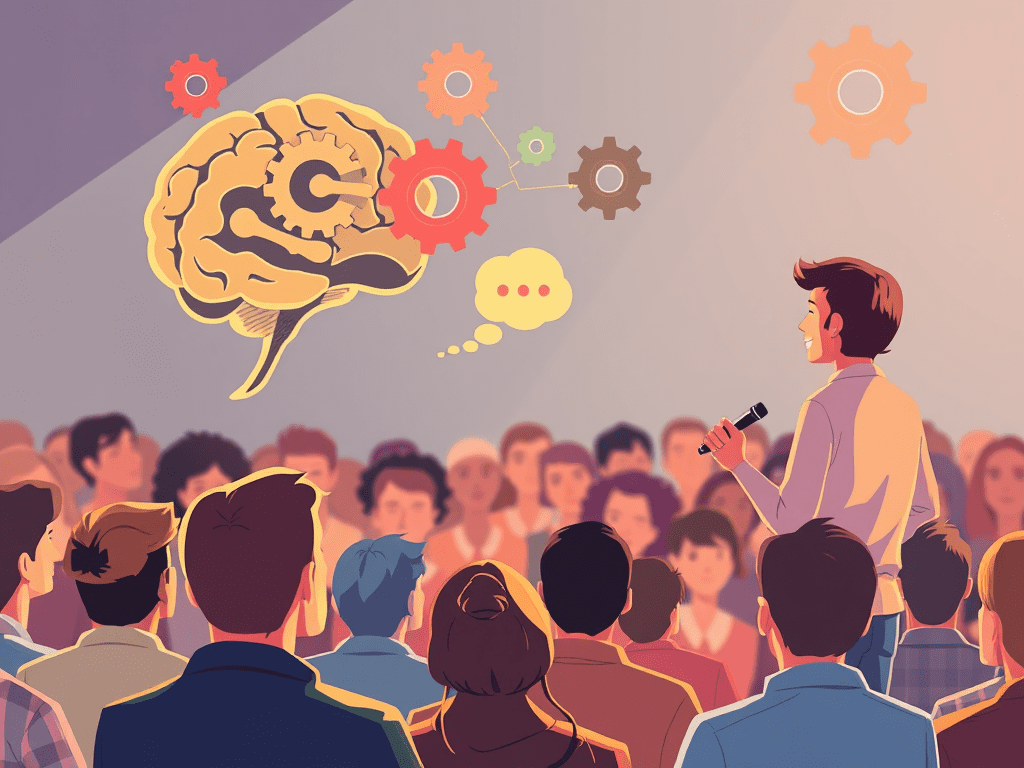
In an age where audiences are bombarded with endless content, the Emotional Trigger Method stands out as a proven framework to cut through the noise. By leveraging core psychological principles, this approach transforms ordinary messages into unforgettable experiences. Throughout this pillar post, you’ll learn how to harness emotional triggers, apply neuromarketing insights, and align your communication with the deepest needs of your audience—ensuring your message resonates long after it’s heard.
Understanding the Emotional Trigger Method: Foundations of Unforgettable Messaging
The Emotional Trigger Method is the bedrock of all high-impact communication. In this section, we explore the fundamental concepts that make psychology-driven messaging so compelling. You’ll discover what emotional triggers are, why they work, and how to match them to your audience’s intrinsic motivations for maximum memorability.
Defining Emotional Triggers in Communication
Emotional triggers are stimuli—words, images, or stories—that spark a strong feeling in the recipient’s mind. These triggers tap into universal human emotions and drive people to pay attention, remember, and act. Key emotional triggers include:
- Fear: Highlighting risks or losses to prompt urgency.
- Joy: Showcasing positive outcomes or celebrations.
- Curiosity: Piquing interest with intriguing questions or mysteries.
- Belonging: Emphasizing community and shared identity.
- Surprise: Introducing unexpected twists to maintain engagement.
By deliberately choosing and combining these triggers, the Emotional Trigger Method ensures your copywriting or content marketing consistently strikes a chord.
The Role of Psychology in Persuasive Messaging
Psychology underpins why emotional triggers work. The human brain processes emotional information more rapidly and stores it more securely than pure facts. This phenomenon stems from the limbic system—our emotional processing center—which governs decision-making and memory storage. Persuasive messaging leverages two core principles:
- Dual-Process Theory: Emotional (System 1) thinking is fast, automatic, and intuitive. Rational (System 2) thinking is slower and analytical. Emotional triggers engage System 1, creating immediate interest.
- Cognitive Biases: Heuristics like the availability bias (we recall what’s most salient) and the framing effect (our choices change based on presentation) amplify the impact of well-placed emotional cues.
Understanding these psychological drivers empowers content architects to craft messages that not only capture attention but also embed themselves in audience memory.
Aligning Emotional Triggers With Audience Needs
A trigger alone isn’t enough; it must resonate with your specific audience’s desires and pain points. Alignment begins with thorough audience research, leading to tailored messaging that feels deeply personal:
- Develop Personas: Create detailed profiles that include demographics, challenges, and aspirations.
- Empathy Mapping: Chart what your audience thinks, feels, sees, and hears to uncover the most relevant emotional triggers.
- Trigger Matching: Assign primary triggers (e.g., fear of missing out) and secondary triggers (e.g., joy of discovery) to each persona segment.
When emotional triggers align authentically with audience needs, your messaging transcends mere information—it becomes an experience, driving deeper engagement and retention.
The Science of Emotion: Psychological Principles That Drive Engagement
At the core of the Emotional Trigger Method lies a deep understanding of how the human brain processes feelings. By grounding your messaging in proven psychological principles, you ensure that every word resonates powerfully. In this section, we reveal the neuroscience behind emotional resonance, explain how cognitive biases enhance message retention, and compare emotional versus rational appeals—equipping you with the science you need to make your content truly unforgettable.
Neuromarketing Insights on Emotional Resonance
Neuromarketing merges neuroscience and marketing to reveal how emotions guide decision‑making. When you tap into emotional resonance, you stimulate key brain regions—most notably the amygdala and the nucleus accumbens—that govern fear, pleasure, and reward. This biological response explains why messages that evoke strong feelings are more memorable and shareable.
- Amygdala Activation: The amygdala processes emotional stimuli in milliseconds, flagging high‑impact content for long‑term memory storage.
- Reward Pathways: Positive emotional triggers (e.g., joy, anticipation) release dopamine in the nucleus accumbens, reinforcing behaviors like clicking, sharing, or subscribing.
- Mirror Neurons: When your audience witnesses relatable emotions in your storytelling, mirror neurons fire, fostering empathy and deeper engagement.
Integrating these neuromarketing insights into the Emotional Trigger Method means crafting headlines, visuals, and narratives that directly activate these neural circuits—making your message not just read, but felt.
The Role of Cognitive Biases in Message Retention
Cognitive biases are mental shortcuts that simplify information processing, but they also create predictable patterns in how people absorb and recall content. By strategically framing your messaging to leverage these biases, you boost retention and persuasion.
- Availability Heuristic: People judge the likelihood of events based on how easily examples come to mind. Use vivid anecdotes or striking statistics to make your message salient.
- Anchoring Effect: Initial information serves as a reference point for all subsequent judgments. Start with a compelling fact or emotional hook to anchor audience expectations.
- Confirmation Bias: Audiences favor information that confirms their existing beliefs. Acknowledge common assumptions before presenting new insights to reduce resistance.
- Framing Effect: The way you present choices influences decisions. Frame benefits in terms of gains (“Boost your conversion rate by 30%”) rather than losses to inspire optimism.
By weaving these cognitive biases into your Emotional Trigger Method, you guide readers toward the conclusions you want them to draw—while ensuring they remember your message long after.
Emotional vs Rational Appeals: Striking the Right Balance
Effective persuasive messaging blends emotional and rational appeals in a precise ratio. Emotional triggers create instant connection, while rational arguments provide the logical scaffolding that justifies action. Understanding when and how to deploy each ensures your Emotional Trigger Method achieves both impact and credibility.
- Lead With Emotion: Open with a compelling story or question that taps into a core desire (e.g., belonging, security, achievement). This engages System 1 thinking—fast, intuitive, and driven by emotion.
- Support With Logic: Follow emotional hooks with data, testimonials, and clear benefits. This appeals to System 2 thinking—slower, analytical, and detail‑oriented—reinforcing trust and reducing skepticism.
- Use Contrast: Contrast emotional highs with logical explanations. For instance, share an emotional success story, then break down the step‑by‑step strategy that made it possible.
- Iterate Based on Context: Complex B2B decisions may require a higher ratio of rational evidence, whereas consumer branding often thrives on emotion-driven narratives.
By calibrating emotional and rational elements within your messaging framework, you leverage the full spectrum of psychological drivers—ensuring your audience feels compelled and justified to act on your unforgettable message.
Identifying Emotional Triggers: Research and Audience Analysis
Before you can deploy the Emotional Trigger Method effectively, you must first unearth the specific stimuli that resonate with your target audience. This process hinges on deep audience research and precise analysis of customer motivations. In this section, you’ll learn how to conduct emotional audience research, map pain points and desires, and leverage surveys and feedback to pinpoint the exact triggers that will make your message unforgettable.
Conducting Emotional Audience Research
Emotional audience research goes beyond demographics and generic buyer personas—it uncovers the visceral drivers behind consumer behavior. Start by integrating qualitative methods (e.g., interviews, focus groups) with quantitative analytics (e.g., web analytics, social listening) to form a 360° view of your audience’s emotional landscape:
- Social Listening: Monitor forums, social media comments, and review sites to identify recurring emotional language—words like “frustrated,” “excited,” or “relieved.”
- Behavioral Analytics: Use tools like heatmaps and click‑through data to see which headlines or images generate the strongest engagement signals.
- In‑Depth Interviews: Conduct one‑on‑one conversations that delve into personal stories, uncovering the fears, hopes, and values that drive decisions.
- Empathy Mapping Workshops: Collaborate with stakeholders to chart what customers think, feel, see, and hear—revealing emotional entry points for your messaging.
Combining these approaches ensures your Emotional Trigger Method is rooted in real-world emotional resonance rather than assumptions.
Mapping Customer Pain Points and Desires
Effective emotional triggers align directly with your audience’s most pressing challenges and deepest aspirations. By mapping pain points and desires, you create a framework for trigger selection that feels authentic and relevant:
- Pain Point Identification: List common obstacles your audience faces—time constraints, budget limitations, or lack of expertise—and rank them by emotional intensity.
- Desire Charting: Catalog the outcomes your audience most craves—status, security, freedom—and classify them according to Maslow’s hierarchy (e.g., belonging, esteem, self‑actualization).
- Trigger Matrix: Build a matrix that pairs pain points (e.g., “overwhelm”) with corresponding emotional triggers (e.g., relief, clarity) to guide your messaging strategy.
- Competitive Audit: Analyze competitor messaging to spot gaps where unmet emotional needs reveal opportunities for differentiation.
This mapping exercise transforms abstract customer insights into actionable blueprints for the Emotional Trigger Method, ensuring each message strikes at the heart of what truly motivates your audience.
Using Surveys and Feedback to Uncover Triggers
Surveys and direct feedback channels are indispensable for validating your emotional hypotheses. They provide concrete data on which triggers resonate most strongly, enabling you to optimize your Emotional Trigger Method through iterative refinement.
Designing Effective Emotional Surveys
A well-crafted survey balances open‑ended questions with scaled responses to capture both nuance and quantifiable insights. Key survey design best practices include:
- Open‑Ended Prompts: Ask respondents to describe recent experiences using emotional language (“How did you feel when you…?”) to surface authentic trigger words.
- Likert Scales: Use 5‑ or 7‑point scales to gauge intensity of emotions (e.g., “On a scale of 1 to 7, how relieved did you feel after…”).
- Trigger Ranking: Present a list of potential triggers and ask participants to rank their top three, revealing which emotions carry the most weight.
- Segmentation Questions: Collect demographic or behavioral data (e.g., job role, industry) to analyze trigger preferences across audience segments.
Analyzing Qualitative vs Quantitative Data
Once responses roll in, separate your analysis into qualitative thematic coding and quantitative statistical review to extract both depth and scale:
- Thematic Coding: Group open‑ended responses by emotion categories (e.g., fear, joy, belonging) to identify dominant themes and latent needs.
- Statistical Analysis: Calculate mean scores and distribution curves for scaled items, pinpointing which triggers score highest overall and within subgroups.
- Cross‑Tabulation: Cross‑reference emotional intensity scores with demographics to tailor trigger usage for each persona segment.
- Iterative Validation: Conduct follow‑up surveys focused on top triggers to confirm their effectiveness before full-scale deployment.
By integrating qualitative richness with quantitative rigor, you validate your Emotional Trigger Method against real audience data—ensuring that every message you craft is powered by the precise emotional levers that drive engagement and memorability.
Crafting Unforgettable Messages: Copywriting Techniques That Convert
With your emotional triggers identified, it’s time to translate insights into compelling copy. This section walks through proven frameworks, language strategies, and structural techniques to elevate your messaging. By mastering these copywriting methods, you’ll create headlines, body copy, and calls-to-action that not only engage emotions but also drive measurable results.
5 Storytelling Frameworks That Evoke Emotion
Storytelling is the backbone of any unforgettable message. These five frameworks leverage narrative psychology to create emotional resonance and guide audiences toward your desired outcome:
- The Hero’s Journey: Follow the classic arc—ordinary world, call to adventure, crisis, transformation, and return. Audiences empathize with the hero’s struggle and celebrate their triumph, triggering inspiration and aspiration.
- Problem-Agitate-Solve (PAS): Present a pain point, amplify its emotional impact, then offer your solution. This framework uses fear and relief triggers in rapid succession to create urgency and hope.
- AIDA (Attention, Interest, Desire, Action): Capture attention with a powerful hook, build interest through emotional storytelling, stoke desire with benefits, and drive action with a clear next step.
- StoryBrand (SB7): Position your audience as the hero and your brand as the guide. Clarify their problem, outline a plan, call them to action, and paint a picture of success or failure.
- Features-Advantages-Benefits (FAB): Describe what your product or service does (feature), why it matters (advantage), and how it transforms the customer’s life (benefit). Leverage joy and belonging triggers in the benefits.
By choosing the right framework for your objective—whether it’s brand awareness, lead generation, or customer retention—you ensure your emotional triggers are embedded within a familiar, persuasive structure.
Power Words and Sensory Language for Maximum Impact
Words carry emotional weight. Selecting potent, sensory-rich language amplifies your message’s resonance and memorability. Incorporate these tactics to harness the full power of language:
- Use Action Verbs: Replace passive constructions (“Your report can be improved”) with dynamic verbs (“Transform your report”). Action verbs stimulate excitement and agency.
- Leverage Power Words: Integrate high-impact words like “proven,” “exclusive,” “breakthrough,” and “guaranteed” to evoke trust, curiosity, and urgency.
- Invoke the Senses: Describe textures, sounds, and visuals (“velvety smooth,” “roaring applause,” “glowing results”) to transport readers into the experience, triggering vivid memory encoding.
- Emotional Adjectives: Enhance nouns with adjectives that carry emotional weight: “life-changing strategy,” “heart-pounding journey,” “unmatched clarity.”
- Rhythm and Cadence: Vary sentence length and structure for a natural flow. Short, punchy sentences can heighten tension; longer, descriptive sentences deepen immersion.
Incorporating power words and sensory language into your copy ensures every phrase works to reinforce emotional triggers—making your message both compelling and unforgettable.
Structuring Messages for Unbeatable Engagement
Even the most persuasive language needs a clear structure to guide readers seamlessly from attention to action. Employ these structural techniques to boost readability, retention, and conversion:
Using Lists, Numbers, and Patterns
Lists and numbers organize information into digestible chunks, aligning with how our brains process and recall data:
- Headings with Numbers: “7 Secrets to…” or “5 Steps for…” signal specificity and set clear expectations.
- Ordered Lists: Step-by-step guides or ranked benefits help audiences follow a logical progression.
- Consistent Patterns: Repeat a phrase structure (“First… Second… Finally…”) to create a rhythmic familiarity that reinforces memory.
- Checklist Format: Actionable checklists (“Have you…?” lists) trigger a completion bias, motivating readers to act and feel accomplished.
Employing Contrast and Surprises
Contrast keeps your audience alert and emotionally invested. Surprises reignite engagement when attention wanes:
- Expectation vs Reality: Present a common belief, then reveal an unexpected truth to provoke curiosity (“You think X is true—until you learn…”).
- Dark Horse Analogy: Contrast a familiar solution with a novel approach to highlight your unique value proposition.
- Visual Breaks: Use short quotes, bold text, or callout boxes to interrupt long paragraphs and re-engage readers.
- Surprising Data Points: Insert a startling statistic or case study result that challenges assumptions and sparks renewed interest.
By weaving contrast and surprise into your structure, you maintain emotional momentum, ensuring readers stay engaged from the opening headline to the final line.
Testing Emotional Impact: Metrics and Optimization
No matter how well you craft your message, the true proof of the Emotional Trigger Method lies in real‑world performance. Rigorous testing and optimization ensure your psychology‑driven copy continues to resonate and convert. In this section, you’ll discover how to A/B test emotional headlines and hooks, measure critical engagement metrics, and iterate based on data and feedback to continuously refine your unforgettable messaging.
A/B Testing Emotional Headlines and Hooks
A/B testing—comparing two variants of your headline or lead—inserts scientific rigor into your Emotional Trigger Method. By isolating a single emotional variable, you determine which trigger most effectively captures attention and drives clicks. Follow these best practices:
- Test One Variable at a Time: Change only the emotional trigger in your headline (e.g., “Unlock Joy” vs. “Overcome Fear”) to attribute performance differences directly.
- Define Clear Success Metrics: Use click‑through rate (CTR) or open rate (for email) as your primary KPI. A 10–20% lift in CTR often indicates a significant emotional resonance improvement.
- Ensure Statistical Significance: Run your test until you reach a minimum of 95% confidence. Most platforms (Google Optimize, Optimizely, VWO) calculate this automatically based on traffic volume and conversion rates.
- Segment Your Audience: Test across different demographics, devices, or channels (social vs. email) to identify which emotional triggers work best for each segment.
- Document and Compare Results: Maintain a testing log that records headline copy, traffic volumes, conversion metrics, and confidence levels—creating a repository of emotional trigger performance data.
By systematically A/B testing headlines and hooks, you build an empirical foundation for your Emotional Trigger Method—ensuring each future message leverages proven emotional language.
Measuring Emotional Engagement Metrics
Beyond clicks and opens, measuring deep engagement reveals how effectively your psychological tactics hold attention and drive action. Key metrics to track include:
- Time on Page: Longer dwell times indicate that emotional triggers and narrative structure are sustaining reader interest.
- Scroll Depth: Tools like Google Analytics or Hotjar show what percentage of readers reach key emotional beats in your content.
- Social Shares and Comments: High share rates signal that your message evokes strong emotional reactions—joy, surprise, or solidarity—that audiences want to broadcast.
- Sentiment Analysis: Use natural language processing platforms (e.g., MonkeyLearn, Brandwatch) to score comments and reviews for positive or negative emotional language related to your message.
- Conversion Rates: Track micro‑conversions (e.g., email signups, PDF downloads) linked to emotionally charged CTAs, as well as macro‑conversions (sales, registrations).
Combining quantitative metrics with sentiment insights provides a holistic view of how your Emotional Trigger Method performs—highlighting which emotional elements resonate and where friction may arise.
Iterating Based on Data and Feedback
Optimization is an ongoing cycle of hypothesis, test, measurement, and refinement. To keep your messaging unforgettable, establish a continuous improvement process:
- Hypothesis Development: Use your engagement metrics to generate hypotheses (e.g., “If we replace a fear‑based headline with a joy‑based hook, CTR will increase by 15%”).
- Rapid Experimentation: Implement tests in agile sprints—run short, focused experiments on headlines, subheads, or lead paragraphs, then analyze results quickly.
- Content Audits: Quarterly audits identify top‑performing emotional triggers and underperforming pages. Update low‑engagement content with new emotional angles or power words.
- User Feedback Loops: Solicit direct feedback via on‑page polls or post‑conversion surveys asking “Which part of this message resonated most and why?” Use responses to refine your trigger selection.
- Knowledge Sharing: Document successful emotional frameworks in a shared style guide or playbook. Encourage writers and marketers to reference past wins when crafting new content.
By embedding testing and optimization into your workflow, you ensure the Emotional Trigger Method evolves alongside your audience—sustaining the emotional power that makes your messaging truly unforgettable.
Advanced Applications and Real‑World Case Studies
After mastering the Emotional Trigger Method’s core techniques, you’re ready to see how leading brands apply psychology-driven messaging at scale. In this section, we explore advanced applications in content marketing, email and social campaigns, and dissect real-world success stories. These case studies demonstrate how emotional triggers translate into measurable results—providing templates you can adapt for your own unforgettable messaging.
Emotional Trigger Method in Content Marketing
Content marketing thrives when it engages audiences on a human level. By integrating emotional triggers throughout your content funnel—from blog posts to interactive tools—you boost loyalty, shares, and conversions.
- Long-Form Pillars With Empathy: Use the PAS framework in cornerstone articles to empathize with top pain points, then follow with solutions supported by data. For example, a financial advisor might open with clients’ fear of retirement shortfalls before offering step-by-step investment strategies.
- Interactive Quizzes and Assessments: Quizzes that promise insights (“Discover Your Productivity Personality”) tap into curiosity and belonging. Follow each result with tailored recommendations that validate the user’s identity and suggest next steps.
- Video Storytelling: Short documentaries or customer testimonial videos harness mirror neurons and joy triggers. By featuring real clients describing transformation, you create authenticity and spark the desire to achieve similar outcomes.
- Evergreen Email Sequences: Layer emotional peaks and valleys across a nurture sequence—starting with a curiosity-driven subject line, building rapport with empathetic stories, and culminating in a sense of urgency around limited-time offers.
When you embed emotional triggers at every customer touchpoint, your content marketing moves beyond information delivery to become a dynamic journey—one that readers feel invested in and eager to share.
Leveraging Psychology in Email and Social Campaigns
Email and social platforms demand concise, punchy messaging that stops the scroll and persuades in seconds. The Emotional Trigger Method helps you craft subject lines, posts, and ads that stand out in crowded inboxes and feeds.
- Fear of Missing Out (FOMO): Limited-time promotions or exclusive invitations (“Only 48 Hours Left to Join Our Masterclass”) leverage urgency and scarcity triggers to drive immediate action.
- Social Proof and Belonging: Highlight user counts or community testimonials (“Join 10,000+ Marketers Who’ve Doubled Their Leads”) to trigger belonging and reduce anxiety about taking the next step.
- Surprise and Delight: Unexpected gifts or tips in email (“Here’s a Free Toolkit”) activate joy and reciprocity triggers—boosting open rates and clicks in subsequent messages.
- Micro-Story Tweets and Posts: In 280 characters or fewer, share a mini PAS sequence: state a common pain, agitate it with a vivid detail, and link to the full solution. This sharp emotional arc captures attention and encourages retweets.
By aligning each message with audience psychology—whether through scarcity, social proof, or reciprocity—you optimize email and social performance, making every send count toward building an unforgettable brand presence.
Success Stories: Brands That Mastered Emotional Messaging
Real-world case studies illuminate how the Emotional Trigger Method drives tangible outcomes. Below, we examine two examples where brands used specific triggers to achieve remarkable results.
Case Study: Boosting Conversions With Emotional Hooks
Brand: Charity: Water
Challenge: Drive recurring donations amid donor fatigue.
- Trigger Used: Empathy and achievement.
- Approach: In a video series, Charity: Water showcased individual stories of communities gaining access to clean water. Viewers saw the transformation—from illness to thriving villages—evoking empathy and the aspiration to contribute to change.
- Results: Recurring monthly donations increased by 35%, and average gift size rose by 22% within three months of campaign launch.
This campaign prioritized human-centric storytelling and vivid before-and-after contrasts, proving that empathy-driven content can convert one-time donors into long-term supporters.
Case Study: Enhancing Brand Loyalty Through Emotional Resonance
Brand: Nike
Challenge: Reinforce brand loyalty in a saturated athletic apparel market.
- Trigger Used: Inspiration and belonging.
- Approach: The “Dream Crazy” campaign featured athletes overcoming adversity, narrated by Colin Kaepernick. By aligning with themes of perseverance and social justice, Nike tapped into pride and community identity among its core demographics.
- Results: Despite initial controversy, Nike saw a 31% increase in online sales and a 13% boost in brand favorability within six months.
Nike’s strategic use of inspirational storytelling and social identity solidified its position as more than an apparel company—it became a symbol of shared values and collective aspiration.
These case studies underscore that when you apply the Emotional Trigger Method thoughtfully—grounded in real audience insights and rigorous testing—you create messaging that resonates deeply, drives action, and builds lasting loyalty.
Discover more from Alchem Learning
Subscribe to get the latest posts sent to your email.