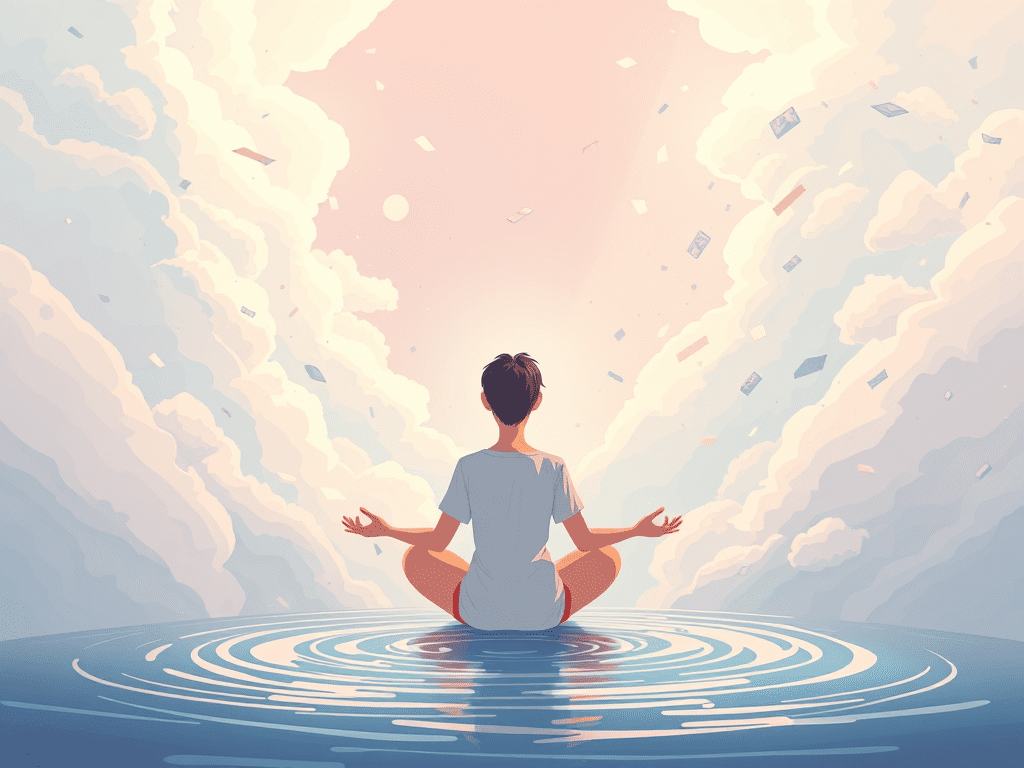
In our fast‑paced world, the battle between relentless thought loops and inspired creativity is one many of us face. Before diving into actionable mindfulness practices designed to shift you from overthinking to a sustained flow state, it’s crucial to understand the barriers that stand between you and your most innovative self. This foundational exploration sets the stage for unlocking creativity through targeted mindfulness techniques.
Understanding Overthinking and Its Creative Costs
Overthinking isn’t merely a habit of dwelling on details—it’s a cognitive pattern that stifles imagination, induces stress, and derails creative flow. In this section, we’ll define what overthinking truly entails, uncover how it sabotages peak performance, and highlight the tell‑tale signs that you’re caught in an analysis paralysis loop.
What Exactly Is Overthinking?
Overthinking describes a state of persistent rumination in which the mind lingers on potential outcomes, past mistakes, or future uncertainties. Rather than fostering clarity, this mental clutter amplifies self‑doubt and distracts from the task at hand. Key characteristics include:
- Repetitive Thought Loops: Revisiting the same ideas or worries without arriving at a resolution.
- Perfectionism Bias: Insisting that every detail be flawless before taking action, slowing momentum.
- Decision Fatigue: Feeling mentally exhausted by weighing options endlessly, leading to procrastination.
By understanding these components, you’ll recognize that overthinking isn’t an asset but a barrier to tapping into your innate creative potential.
How Overthinking Blocks Creative Flow
Creative flow—a state of effortless focus where ideas emerge freely—requires mental spaciousness. Overthinking, on the other hand, consumes cognitive resources and interrupts the natural rhythm of ideation. Here’s how it interferes:
- Heightened Anxiety: Worrying about “getting it right” triggers stress responses, reducing the brain’s capacity for divergent thinking.
- Reduced Present‑Moment Awareness: Ruminating on the past or future pulls attention away from the sensory experiences that fuel inspiration.
- Impaired Working Memory: Juggling too many thoughts overloads working memory, preventing new connections critical for creativity.
- Risk Aversion: Overthinking magnifies potential failures, discouraging experimentation and exploration.
When mental energy is diverted to managing these stressors, the seamless shift into flow state becomes increasingly difficult, if not impossible.
Key Signs You’re Trapped in Analysis Paralysis
Recognizing analysis paralysis is the first step toward reclaiming creative momentum. If you identify with any of the following indicators, it may be time to implement mindfulness practices that unlock creativity:
- Chronic Procrastination: Delaying projects despite enthusiasm or capability.
- Endless Research: Consuming more information than necessary without progressing to action.
- Decision Avoidance: Struggling to choose a direction or concept, even when options are apparent.
- Creative Blocks: Feeling mentally “stuck,” unable to generate new ideas or solutions.
- Persistent Self‑Critique: Overanalyzing each idea’s flaws instead of refining and iterating.
Awareness of these symptoms empowers you to consciously interrupt counterproductive thought cycles. In the next sections, we’ll explore mindfulness strategies that break free from overthinking and guide you toward a sustainable flow state.
Decoding Flow State: Your Gateway to Peak Creativity
Flow state represents the pinnacle of creative performance, a zone where thought and action merge seamlessly and innovative ideas emerge effortlessly. By understanding flow through the lens of mindfulness, you gain insight into how present‑moment awareness and focused attention catalyze peak creativity. This section unpacks the precise definition of flow in contemplative practice, explores the underlying neuroscience that supports effortless idea generation, and highlights the tangible benefits of sustaining flow in your creative endeavors.
Defining Flow State in Mindfulness Terms
In mindfulness practice, flow state is often described as “effortless presence,” where distraction fades and full immersion in the task takes precedence. This experience aligns with core mindfulness principles:
- Single‑Pointed Attention: Directing awareness to one object—be it the breath, a creative task, or sensory input—mirrors how flow demands undivided concentration.
- Non‑Judgmental Observation: Observing thoughts without labeling them “good” or “bad” parallels flow’s absence of self‑critique, allowing ideas to surface without internal resistance.
- Temporal Dissolution: Just as deep meditation can blur the perception of time, flow is characterized by hours passing like minutes, reflecting complete absorption.
- Intrinsic Motivation: Mindfulness fosters an inward drive to engage fully in the present moment—this same intrinsic reward mechanism fuels sustained flow.
Viewed through these mindfulness dimensions, flow state is not a mystical anomaly but a reproducible mental mode cultivated by consistent contemplative practice.
The Neuroscience Behind Effortless Creativity
Recent neuroimaging studies reveal that flow state corresponds with a distinctive brain activation pattern that optimizes creative output:
- Transient Hypofrontality: During flow, activity in the prefrontal cortex—the seat of self‑critical analysis—diminishes, reducing overthinking and self‑doubt. This “quieting” effect allows spontaneous insights to surface without executive inhibition.
- Enhanced Dopaminergic Signaling: Flow triggers dopamine release in reward circuits (notably the ventral tegmental area and nucleus accumbens), reinforcing motivation and pleasurable engagement in the creative task.
- Increased Alpha and Theta Rhythms: Electroencephalography (EEG) measures show elevated alpha waves in sensory areas and theta waves in associative regions, indicative of relaxed alertness and heightened pattern recognition essential for novel ideation.
- Functional Connectivity Boost: Flow enhances communication between distant brain networks—such as the default mode network (DMN) and executive control network (ECN)—facilitating the integration of intuitive insights with strategic planning.
By understanding these neural dynamics, you can appreciate why shifting from overthinking into flow requires both reducing top‑down criticism and cultivating a neurochemical environment conducive to creativity.
Tangible Benefits of Sustained Flow
Embedding flow state into your creative routine yields measurable advantages that extend beyond momentary inspiration. Key benefits include:
- Accelerated Idea Generation: With critical chatter minimized, you produce more raw concepts in less time, feeding a healthy pipeline of innovation.
- Improved Quality of Output: Heightened focus and intrinsic motivation foster deeper engagement, leading to work that reflects originality and craftsmanship.
- Stress Reduction and Well‑Being: The harmonious blend of challenge and skill in flow promotes the release of endorphins and dopamine, counteracting burnout and enhancing overall life satisfaction.
- Enhanced Learning and Skill Acquisition: Sustained immersion in challenging tasks accelerates neural plasticity, making it easier to master new techniques and apply them creatively.
- Consistent Performance Under Pressure: Because flow is trainable through mindfulness practice, you build resilience against performance anxiety, allowing peak creativity even in high‑stakes scenarios.
These outcomes demonstrate that flow state is not a fleeting novelty but a strategic advantage for anyone seeking to unlock creativity through mindfulness. In the following sections, you’ll discover specific practices and workflows designed to transition effortlessly from analysis paralysis into this empowering mental mode.
5 Foundational Mindfulness Practices to Break Free From Overthinking
To transition from analysis paralysis into a sustained flow state, it’s essential to establish a solid foundation of mindfulness practices. These five core techniques target the cognitive patterns that fuel overthinking, reduce stress, and prime your mind for creative breakthroughs. Consistent application of these exercises will unlock creativity by fostering present‑moment awareness and mental clarity.
1. Breath Awareness Meditation
Breath awareness meditation anchors the mind to the simple rhythm of inhalation and exhalation, interrupting repetitive thought loops and restoring focus. This practice is a cornerstone in mindfulness strategies for unlocking creativity.
Step-by-Step Guide
- Find a Comfortable Posture: Sit upright in a chair or cushion, with spine straight but relaxed.
- Set a Timer: Begin with 5 minutes, gradually increasing to 15–20 minutes.
- Focus on the Breath: Direct attention to the sensation of air entering the nostrils and filling the lungs.
- Notice Wanderings: When the mind drifts, gently label the distraction (“thinking,” “planning”) and return to the breath.
- Close with Reflection: After the timer ends, take three deep breaths and observe any shifts in mental clarity.
Tips to Avoid Common Pitfalls
- Avoid Forcing Stillness: Accept that the mind will wander; gently guide it back rather than striving for perfection.
- Skip the Judgment: Reframe “I’m distracted” to “Noticing distraction,” reducing self‑critique.
- Maintain Consistency: Practice daily, ideally at the same time, to build a reliable habit.
- Start Small: Short sessions prevent overwhelm and reinforce positive associations with the practice.
2. Body Scan for Creative Clarity
Body scan meditation cultivates somatic awareness, releasing tension that often underlies mental resistance. By methodically checking in with each region of the body, you create space for fresh ideas to emerge.
How to Practice Daily
- Lie Down or Recline: Choose a quiet space free from interruptions.
- Progressive Attention: Start at the toes and mentally move up to the head, spending 10–20 seconds on each area.
- Sensory Notation: Acknowledge sensations—tingling, warmth, tightness—without trying to change them.
- Release Tension: As you exhale, imagine letting go of stress held in that body part.
- Return to Breath: Upon completion, take a few conscious breaths to center before resuming activities.
3. Labeling Thoughts Without Judgment
Labeling thoughts—also known as “noting”—is a mindfulness practice that breaks the grip of overthinking by categorizing mental events and preventing attachment. This simple technique helps you observe patterns without getting lost in them.
- Notice the Thought: Pause when you catch yourself ruminating.
- Assign a Label: Mentally tag it as “planning,” “worrying,” “remembering,” etc.
- Release and Return: Visualize setting the thought on a leaf passing down a stream, then refocus on your primary object (e.g., breath or task).
By repeatedly practicing noting, you weaken the neural loops that fuel analysis paralysis and reinforce a gentle awareness that nurtures creativity.
4. Focused Attention Exercises
Focused attention exercises train your mind to sustain concentration on a single stimulus, enhancing the ability to enter flow. These drills build mental endurance and sharpen cognitive control.
- Candle Gazing (Trataka): Softly fix your gaze on a flame for 2–5 minutes, blinking only when necessary.
- Object Study: Examine a simple object (e.g., a leaf or stone) in detail—texture, color, shape—for 3–7 minutes without distraction.
- Mantra Repetition: Silently repeat a short phrase (e.g., “I am present”) in sync with your breath.
Regularly integrating these exercises into your routine strengthens the neural pathways that support deep work and creative flow.
5. Mindful Walking for Mental Reset
Mindful walking transforms a routine activity into a dynamic meditation, combining movement with awareness to dissolve overthinking and invite fresh insights.
- Choose a Path: Select a quiet indoor or outdoor route, 5–10 minutes in length.
- Sync Steps and Breath: Inhale for three steps, exhale for three steps, maintaining a comfortable pace.
- Engage the Senses: Notice the contact of your feet with the ground, ambient sounds, and shifts in temperature.
- Redirect Intrusions: If thoughts arise, label them (“thinking”) and gently return to the rhythm of steps and breath.
By embedding mindful walking into breaks or daily commutes, you interrupt unproductive rumination and create a mental reset that primes your brain for creative problem‑solving.
These five foundational mindfulness practices form a cohesive toolkit for breaking free from overthinking. Through consistent application, you’ll cultivate the mental clarity and present‑moment focus necessary to unlock creativity and transition smoothly into a sustained flow state.
Advanced Techniques to Deepen and Sustain Your Flow State
Once foundational mindfulness practices are in place, you can accelerate your journey into sustained flow by integrating advanced techniques. These methods leverage multisensory engagement, movement, and environmental design to deepen focus, enhance creative imagery, and minimize distractions. By combining these approaches, you create a robust system that not only initiates flow state but also sustains it through extended creative sessions.
Visualization and Creative Imagery
Visualization harnesses the brain’s natural capacity to simulate experiences, activating the same neural networks involved in real perception. When incorporated into mindfulness practice, creative imagery primes the mind for innovation and problem solving by building a rich internal canvas from which novel ideas emerge.
Crafting Vivid Mental Scenes
- Select a Clear Theme: Choose an image related to your creative goal—such as a blank canvas for artists or an open road for writers.
- Engage All Senses: Visualize not only shapes and colors, but also sounds, textures, and scents to deepen immersion.
- Anchor with Emotion: Infuse the scene with positive feelings like curiosity or excitement to strengthen neural encoding.
- Iterate and Expand: Spend 5–10 minutes refining details, then mentally “zoom out” to observe how elements interact, fostering associative thinking.
- Transition to Action: Conclude by visualizing yourself engaging with the mental scene—picking up a brush or typing at a keyboard—to bridge imagination and execution.
Mindful Movement: Yoga and Dance
Integrating mindful movement—such as yoga or freeform dance—connects body and mind through intentional motion. This embodied practice awakens proprioception, reduces mental chatter, and primes the nervous system for flow by balancing challenge and skill.
Sequencing for Maximum Focus
- Begin with Grounding Poses: Start in Mountain Pose or Tadasana, focusing on breath and alignment to establish present‑moment awareness.
- Incorporate Flowing Transitions: Move through Sun Salutations or simple vinyasa sequences, matching each movement to the inhale/exhale cycle.
- Introduce Creative Variation: Add a novel element—such as a hand gesture or hip‑hop step—to engage proprioceptive attention and disrupt autopilot patterns.
- Close with Stillness: End in Savasana or a short, stationary stretch, allowing the nervous system to integrate the embodied insights.
- Reflect Briefly: Spend a minute noting shifts in mental clarity or emergent ideas before transitioning back to seated work.
Rhythmic Practices: Music, Mantra, and Drumming
Rhythmic stimulation entrains brain waves, synchronizing hemispheric activity and smoothing the path to flow state. Whether through chanting, instrumental drumming, or background tracks, rhythm anchors attention and modulates arousal to optimize creative focus.
- Mantra Repetition: Silently or aloud repeat a single‑word mantra (“Om,” “Create,” “Focus”) in sync with your breath to foster single‑pointed concentration.
- Drum or Percussive Play: Use hand drums, digital pads, or even tabletop tapping to establish a steady beat; let attention rest on the tactile feedback and sonic resonance.
- Curated Soundscapes: Select instrumental or ambient tracks with a steady tempo (60–80 BPM) to promote alpha‑wave enhancement and reduce internal dialogue.
- Rhythmic Shifts: Alternate between fast and slow patterns every 5 minutes to maintain engagement and prevent habituation.
Digital Detox and Environmental Design
A thoughtfully curated workspace minimizes external interruptions and supports a resilient flow state. By combining digital hygiene with sensory adjustments, you create a sanctuary optimized for creative immersion.
- Implement Scheduled Tech-Free Intervals: Use tools like “Do Not Disturb” or app blockers in 25‑ to 50‑minute cycles, mirroring Pomodoro technique durations.
- Optimize Lighting: Employ natural light or adjustable “warm” bulbs to reduce eye strain and regulate circadian rhythms.
- Control Acoustics: Introduce soft background noise—white noise machines or nature sounds—to mask disruptive interruptions.
- Declutter Physical Space: Keep only essential items in view; a minimalist desk reduces visual distractions and signals readiness to focus.
- Personalize with Intent: Add one or two inspiring objects—plants, artwork, or meaningful trinkets—to foster intrinsic motivation without overwhelming the senses.
By weaving together visualization, embodied movement, rhythmic entrainment, and intentional environment design, you establish a multifaceted support system for deep and sustained flow. These advanced techniques enhance the foundational mindfulness practices, enabling you to lock into creative flow on demand and maintain peak performance throughout extended creative sessions.
Integrating Mindfulness Into Your Daily Creative Workflow
To embed mindfulness practices that unlock creativity into your daily routine, you need a seamless blend of structure and flexibility. By designing intentional rituals, incorporating targeted microbreaks, and fostering collaborative mindfulness, you transform fragmented work sessions into a continuous, high‑focus flow state. The following strategies ensure that overthinking is replaced by present‑moment clarity throughout your creative process.
Designing Morning Rituals for Immediate Flow
Starting your day with a strategic blend of mindfulness and creative priming sets the tone for sustained flow. A well‑crafted morning ritual reduces decision fatigue, curbs overthinking, and signals to your brain that it’s time for creative engagement.
- Wake-Up Mindfully (5 Minutes): Begin with breath awareness meditation—sit at the edge of your bed, close your eyes, and follow three full breaths. This instantly shifts you from reactive thinking into conscious presence.
- Movement and Stretch (10 Minutes): Incorporate gentle yoga or dynamic stretching to release overnight tension. Focus on linking each movement to your inhale and exhale to reinforce single‑pointed attention and prime your body for flow state.
- Creative Visualization (5 Minutes): Visualize your top three tasks or projects for the day. Picture yourself completing each with ease and innovation, engaging all senses to strengthen neural pathways that support creative imagery.
- Priority Mapping (5–10 Minutes): On a single sheet or digital note, list your MITs (Most Important Tasks) in order of creative impact. Keep entries concise—no more than three items—to avoid overthinking and decision paralysis.
- Mindful Transition (2 Minutes): Before opening your computer, pause for a final breath cycle, mentally affirming “I enter flow now.” This ritual cue signals your mind to shift into deep work, minimizing internal resistance.
Structured Microbreaks to Reset Focus
Regularly scheduled microbreaks interrupt unproductive rumination, replenish cognitive resources, and sustain momentum toward flow state. By integrating brief mindfulness interludes into work intervals, you prevent mental fatigue and overthinking from hijacking your creative sessions.
- Pomodoro With Mindful Pause: After each 25‑minute work block, take a 5‑minute mindful break. During this pause, close your eyes and scan your body or practice three cycles of coherent breathing (inhale 4 seconds, exhale 6 seconds).
- Sensory Grounding (2–3 Minutes): Engage one sense deeply—listen to ambient sounds, feel the texture of a desk object, or savor a sip of tea. This anchors attention in the present, counteracting wandering thoughts.
- Micro Movement (2 Minutes): Stand up and perform a short walking meditation or gentle stretches. Synchronize steps or movements with your breath to maintain the flow momentum when you return to your desk.
- Thought Journaling (3 Minutes): Quickly jot down any persistent worries or “to‑do” thoughts in a designated journal. This externalizes distractions, preventing them from simmering in your mind and blocking creative focus.
- Return Ritual (1 Minute): Before resuming work, take a single deep breath and visualize sliding smoothly back into your creative flow, reinforcing the mind‑body connection that underpins sustained focus.
Collaborative Mindful Brainstorming Sessions
Collective creativity benefits immensely when teams adopt mindfulness practices that unlock creativity. Mindful brainstorming reduces groupthink, encourages diverse input, and channels collective energy into a shared flow state.
- Pre‑Session Centering (5 Minutes): Begin with a brief guided group meditation—focus on synchronized breathing to align attention and cultivate psychological safety.
- Clear Intention Setting (3 Minutes): Have each participant silently set a personal creative intention, then share it in one sentence. This clarifies individual goals and fosters accountability.
- Timed Idea Sprints (10 Minutes Each): Use short, focused rounds where individuals generate ideas without critique. Timer‑enforced sprints prevent overthinking and keep the group in a flow‑friendly tempo.
- Mindful Listening (During Discussion): Encourage participants to practice deep listening—fully attend to each idea before mentally formulating a response. This non‑judgmental focus cultivates psychological flow and richer ideation.
- Collective Reflection (5 Minutes): Close with a mindfulness exercise where participants note one insight and one gratitude related to the session. This reinforces positive neurochemistry and primes the team for future collaborative flow.
By integrating these rituals, microbreaks, and collaborative frameworks, you embed mindfulness practices that unlock creativity directly into your daily workflow. This intentional approach dismantles overthinking at every stage, ensuring you enter and sustain flow state with consistency and clarity.
Measuring Success and Overcoming Setbacks on Your Mindful Creativity Journey
Progress on the path from overthinking to flow state isn’t always linear. To maintain momentum and refine your approach, you need reliable feedback loops and recovery strategies. In this section, we’ll explore objective ways to track your flow experiences, diagnose common creative roadblocks, and implement targeted interventions that restore your mindful focus and keep your creativity thriving.
Tracking Flow: Journaling and Metrics
Quantifying subjective states like flow can feel paradoxical, yet systematic tracking illuminates patterns and empowers you to optimize your practice. Establish a simple, consistent journaling protocol that combines qualitative reflection with quantitative markers:
- Session Duration: Record the start and end times of each focused work or mindfulness session. Gradual increases in uninterrupted duration signal deeper immersion.
- Flow Intensity Scale: Rate your perceived level of engagement on a 1–10 scale immediately after each session. Note factors that elevated or diminished intensity (e.g., environment, time of day).
- Idea Output Count: Tally discrete ideas, sketches, or lines of copy produced per session. Tracking volume over time reveals whether mindfulness practices correlate with higher creative yield.
- Subjective Well‑Being: After each session, jot down how energized, focused, or stressed you feel. Use emojis or keywords (“⚡️ energized,” “😌 calm,” “😣 frustrated”) for rapid entry.
- Insight Qualities: Qualitatively describe any breakthrough moments—unexpected connections, novel metaphors, or problem‑solving insights. Over weeks, you’ll identify which practices consistently spark your best ideas.
Centralizing these data points in a dedicated notebook or digital template allows for weekly and monthly reviews. Visualizing trends—such as longer sessions correlating with higher intensity scores—guides deliberate adjustments to your mindfulness and creative routines.
Identifying Common Roadblocks
Even seasoned practitioners encounter obstacles that derail flow state. By proactively recognizing these recurring patterns, you can apply pre‑emptive measures rather than reacting under pressure. Common impediments include:
- Burnout and Fatigue: Extended periods of high‑intensity work without adequate rest lead to cognitive depletion, making mindfulness practices feel burdensome rather than liberating.
- Environmental Interruptions: Unexpected notifications, noisy surroundings, or impromptu requests shatter concentration and reset the cognitive “timer” needed for flow.
- Self‑Critical Narratives: Internal dialogues such as “This isn’t good enough” or “I should be further along” trigger analysis paralysis, undoing the non‑judgmental stance mindfulness cultivates.
- Over-Scheduling: Packing your calendar with back‑to‑back meetings and tasks leaves insufficient whitespace for unstructured ideation and mindful reset.
- Resistance to Change: Cognitive inertia—the tendency to stick with familiar routines even when they’re unproductive—can block adoption of new practices that deepen flow.
Mapping these roadblocks against your flow metrics helps you pinpoint which issue most frequently sabotages your creative momentum and warrants immediate attention.
Actionable Strategies to Get Back on Track
When setbacks occur, swift and structured interventions can restore your mindful equilibrium and re‑ignite flow. Implement these strategies according to the specific barrier you’re facing:
For Burnout and Fatigue
- Scheduled Rest Intervals: Institute a “flow sabbath”—a 24‑hour period each week free from work obligations, filled with restorative activities (nature walks, reading, gentle yoga).
- Sleep Hygiene Audit: Optimize your bedtime ritual—consistent lights‑out time, no screens 30 minutes before sleep, and a cool, dark environment—to enhance cognitive recovery.
For Environmental Interruptions
- Buffer Blocks: Reserve 10-minute “soft start” and “soft end” buffers around meetings to process context and transition mindfully, reducing spillover into deep work.
- Customized Soundscapes: Use noise‑cancelling headphones with nature or white‑noise tracks during high‑focus sessions, and communicate “do not disturb” rules to colleagues or family.
For Self‑Critical Narratives
- Compassionate Reframing: Swap “I can’t” statements with “I’m learning” affirmations in your journal. This cultivates a growth mindset aligned with mindfulness’s non‑judgmental ethos.
- Meta‑Awareness Check‑Ins: Pause mid‑session to label emotional states—“noticing self‑doubt”—then gently redirect attention to your chosen anchor (breath, task, mantra).
For Over-Scheduling
- Time Audit: Track your weekly hours in 30-minute increments to identify “dark matter” tasks—low‑value obligations that erode creative block time.
- Priority Rebalancing: Apply the 80/20 rule: allocate 80% of your creative capacity to top‑impact projects and 20% to administrative tasks, scheduling both mindfully.
For Resistance to Change
- Micro‑Experimentation: Trial new mindfulness techniques in 5-minute increments to reduce psychological barriers to habit adoption.
- Accountability Partnerships: Pair with a peer or coach to share weekly flow metrics and co‑create incremental goals, leveraging social commitment to sustain practice.
By combining rigorous measurement with targeted recovery tactics, you’ll transform setbacks into informative data points. This iterative cycle of tracking, diagnosing, and intervening ensures that your mindful creativity journey remains resilient, dynamic, and primed for continuous innovation.
Discover more from Alchem Learning
Subscribe to get the latest posts sent to your email.